Newsletter #12 | Feb 2026

Real-world lessons from landscapes – plus what's coming up in 2026.

Insights from ILM in action

We were delighted to receive authorisation to extend our work into a no-cost extension (NCE) period that will see us formally ending the Central Component in September 2026. This gives us room to breathe, think, consider and consolidate our learning from four surprising and revealing years, while still offering support to LFF projects that have themselves been granted NCEs.

So, what have we got planned? 

Our work is currently dominated by two major outputs:

‘Global learning’ work – Our teams have been visiting most of the LFF projects, using a consistent methodology, to explore the ways in which each project has inclined towards ILM: the ways in which they have understood it, negotiated it, and the skills and strategies they have utilised to obtain it. I think this is going to be a very insightful product. The team has been dialoguing a lot on how we’re going to analyse this huge body of data, while still being sensitive to the perspectives and knowledge of the individual project teams. I see this exercise as advancing understanding of ILM and how it can be successfully achieved. Shout-out to the pair leading this initiative, Valentina Robiglio and George Schoneveld!

Then there’s the ILM Playbook. For me, this has been – and continues to be – a labour of love. My relationship with the AI tool, Claude, has flourished – I have found him (it?) an indispensable foil – to debate and argue with. My conversations with him run into the gigabytes. 

What will the Playbook be? It is intended to fulfil several roles: an online course for would-be ILM practitioners, a bedrock for our accumulated understanding of what we have learned from the LFF, and a provocation to existing ILM practitioners. Whatever the case, it will be designed and, we hope, used to inspire new thought and reflection – and to advance a global ILM agenda.

And then there’s the plus, plus, plusses: additions to our Landscapes in Practice series, case studies and thematic papers, a series of country briefs, and a number of events that we are still discussing.

The next seven months will be busy and rewarding, and we look forward to sharing these outputs with you all. In the meantime, may 2026 be your ILM year!

– Kim Geheb
Coordinator
Central Component

Aha! What LFF taught us
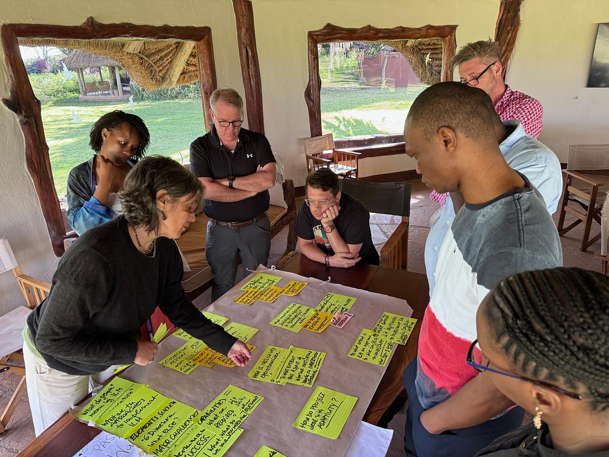
As the Central Component, we spend a lot of time talking about co-learning and co-creation – about arriving in landscapes with curiosity rather than prescriptions. But as the Landscapes For Our Future programme comes to a close, we turned the question inward.

What surprised us?

Perhaps it was the penny dropping in Laos that strong team dynamics really matter when it comes to applying and adapting ILM, or perhaps it was the realization in Vietnam that sometimes landscape solutions need to be found from well outside the landscape. Perhaps it was seeing in Papua New Guineathat ILM has significant peace-building potential, or in Brussels, that ILM can be a really powerful way of heading off the unintended consequences of large-scale infrastructure projects.” 
– Kim Geheb

LFF showed me that you don’t transform landscapes ONLY by rolling out innovations – as necessary as these are. By aligning people, incentives, and power, these innovations can succeed over time. Our innovations succeed when they’re human-led — when they start with listening and trust – and the technical solutions then follow.” 
– Khalil Walji

For me, the main takeaway is that ILM succeeds when it stays grounded in real-life needs, remains flexible in practice, and puts people at the centre – not just in principle, but in delivery.” 
– Divine Foundjem

I think that ILM is not about great project design. What generates a good ILM performance is probably something we do not talk about explicitly: the relational aspects. ” 
– Valentina Robiglio

One key ILM insight for me is that trust and process matter more than tools.” 
– Natalia Cisneros

I think my most significant lesson is that ILM is fundamentally a multicomponent process… Conceptualizing how integration worked across these dimensions pushed us to see the dimensions more as strands in a larger thread that wound around and supported the collective whole.” 
– Peter Cronkleton


REFLECTIONS FROM THE FIELD

What does it take to bring diverse actors together in fragile, contested landscapes?
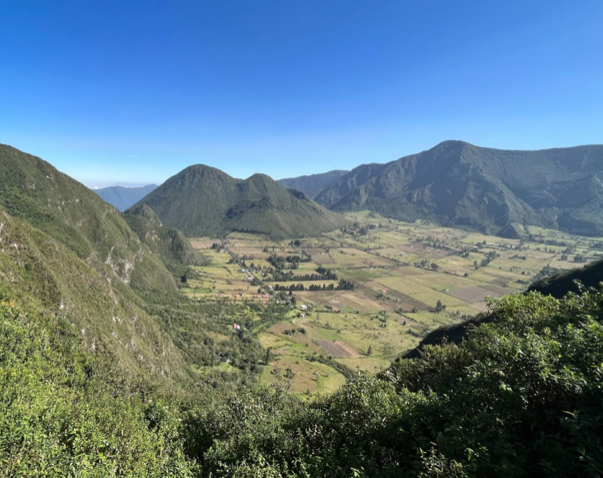
In a parish in Ecuador, the answer turned out to be water.

This case study shows how a shared concern became a catalyst for collaboration – helping government, communities, and technical partners align priorities, build trust, and turn Integrated Landscape Management from concept into practice. While grounded in one place, the lessons are highly transferable.

If you’re navigating fragmented governance, local capacity, or the challenge of turning strategies into action, you’ll find practical insights here – wherever you work.

When governance doesn’t exist, how do you make ILM work?
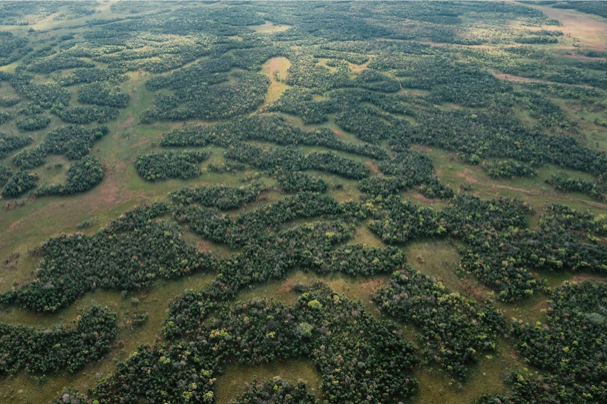
What does it take to practice ILM where there’s almost no permanent state presence, weak institutions, and deeply unequal power dynamics?

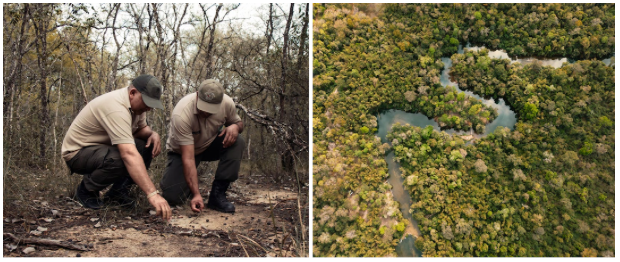
In Paraguay’s northern Chaco, the answer wasn’t perfect plans – it was adaptive learningneutral facilitation, and creative coordination in a governance vacuum. The CERES project helped establish the first sustained collaborative processes in a landscape long managed at a distance, showing how small, pragmatic steps can unlock durable institutional change and bring unlikely partners together. 

If you’re working in contexts where governance is fragile, actors are distant or disconnected, or power imbalances are the norm, this case study offers practical insights on sustaining momentum, building legitimacy, and anchoring collaboration without waiting for ideal conditions.


PUBLICATIONS

From dialogue to delivery
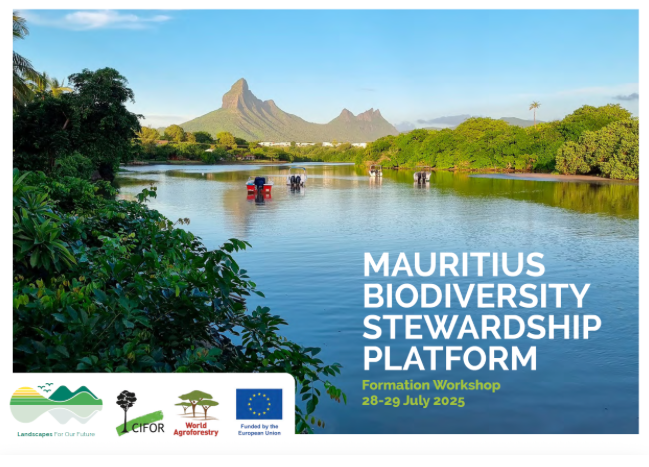
You read the blog, now read the report. 😀 

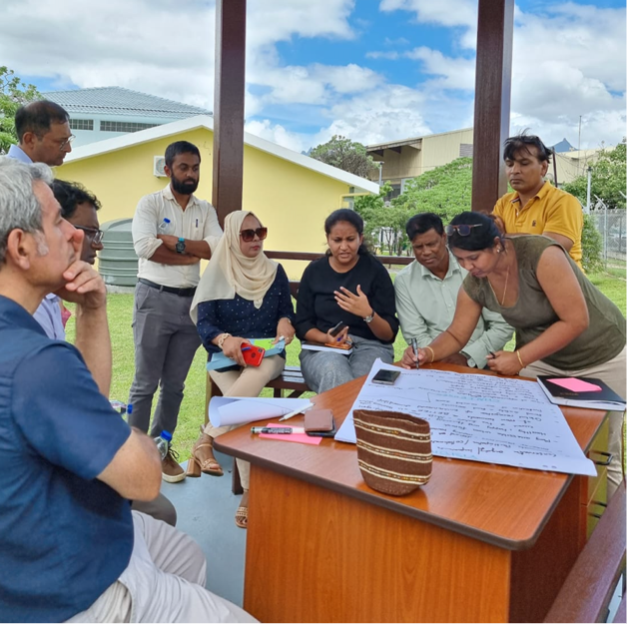
Our report on the Mauritius Biodiversity Stewardship Platform formation workshop goes beyond documenting an event – we wanted to capture a practical blueprint for building multi-actor platforms by using inclusive methods that surface diverse perspectives and move groups from dialogue to concrete action. 

Even if you’re working in a different landscape, you’ll find actionable ideas for designing collaborative processes that build trust, generate momentum, and translate participation into implementation.


What we’ve been reading

Why Integrated Landscape Management matters

This short post is a great reminder of why we invest in ILM in the first place: landscapes are systemic, and so are the challenges we face — from food insecurity to climate vulnerability. By bringing farmers, governments, communities and the private sector together around shared resources like land and water, ILM strengthens food systems, livelihoods and resilience in ways that sector-by-sector approaches simply can’t. 

Learning from doing: Closing knowledge gaps in integrated landscape research

This special feature collection highlights a big lesson for the research–practice interface: there are still critical gaps in how integration is defined, studied, and reported, especially around politics, power dynamics, gender dimensions and local knowledge. A key takeaway is that learning from implementation and empirically documenting what works (and why) remains essential to advancing ILM as both a practice and a field of study. 

Best practices to benefit biodiversity and achieve resilient and sustainable infrastructure

This resource underscores how infrastructure planning and biodiversity outcomes are deeply connected. It offers practical guidance on how developers and governments can design infrastructure that supports ecological functions — a reminder that ILM isn’t only about social processes, but also about building systems that are sustainable from the ground up. (No citation available online but draws on best-practice principles.)

Do they actually work? Social conflict duration and conflict resolution mechanisms in Peru

Early evidence from Peru suggests that popular conflict-resolution mechanisms — like dialogue spaces — may not always shorten conflicts. In some cases, they can prolong engagement if credibility, capacity and broader institutional support are weak. The insight here for landscape practitioners is that mechanisms for dialogue need careful design and legitimacy to help transform conflict, not just host it. 

Power and its discontents: The long road to systemic change in the aid sector
This article challenges the myth that incremental shifts in practice alone will rebalance deep power inequalities in development systems. While localisation and “shift-the-power” initiatives are gaining ground, the authors argue that meaningful, systemic change requires transforming where decision-making and financial power actually sit, not just boosting local participation in existing structures. It’s a crucial insight for anyone committed to genuine co-creation.


Newsletter #11 | July 2025

Integrated Landscape Management in the real world: We’ve been visiting; you’ve been talking; we’ve all been learning.
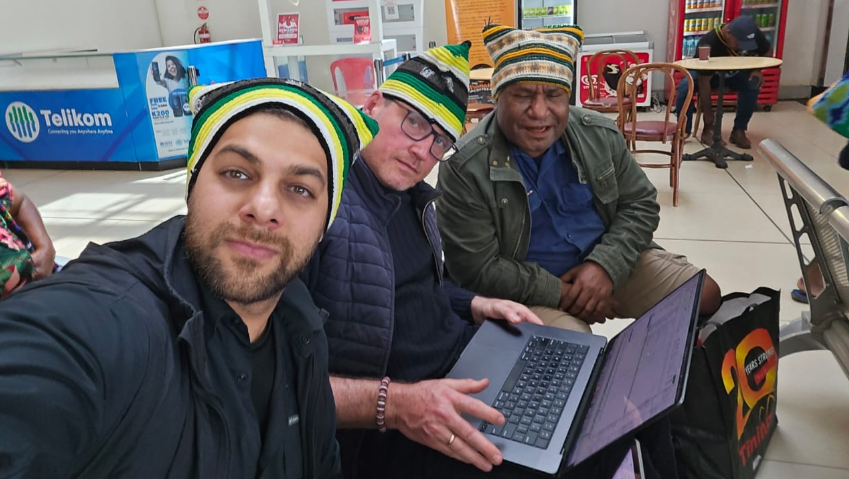
Behind the scenes: Khalil Walji and Kim Geheb flaunt Papua New Guinean headgear as they meet with Sam Moko on their recent learning visit to Enga Province, PNG.

We’ve been travelling. And learning. A lot! Since our Southeast Asian regional summit late last year, we’ve visited the bulk of Landscapes For Our Future’s 22 projects in an effort to glean those insights that are not evident when analyzing single projects. As most of you’re aware, since you’re such key parts of it, we’re documenting your hard-earned experience for the benefit of future practitioners and policymakers who want to design and implement Integrated Landscape Management (ILM) interventions.

The final results are not yet in, but we’re happy to share some initial feedback. In this newsletter: 

👉    Divine Foundjem reflects on some innovative strategies in Francophone Africa

👉   Peter Cronkleton and Natalia Cisneros provide insights on their learnings from Latin America

👉    Kim Geheb contemplates whether ILM can be a vehicle for peace in Papua New Guinea and elsewhere

👉    Our SE Asian colleagues reveal their top ILM success factors

👉    Our Latin American and Caribbean project teams illustrate the role of iterative learning and adaptation in politically sensitive, ecologically important, and operationally challenging settings.

These visits showed us that there’s still so much to uncover. With the right approaches, the right questions, and the right space for reflection, people begin to see things differently.” 
– Divine Foundjem, LFF focal point for Francophone Africa


UPDATES

Insights from our lesson learning process

First: thank you to each of the country teams for being such wonderful hosts and collaborators! You already know that our visits were not business as usual. They were structured moments for real reflection, where we sat down together over long and intense days to look back at what had been done in the landscapes and ask key questions:

  • What have we learned?
  • What worked well?
  • What didn’t work as expected?
  • And what does that tell us about how to improve integrated landscape management?

In his blog post, Divine Foundjem shares how teams used LFF’s framework of six ILM dimensions to uncover valuable insights — from the role of decentralised planning in Senegal to the unexpected impact of football matches as a conflict resolution tool in Burkina Faso.

In Colombia, Ecuador and Paraguay, our team found projects making real strides in bringing diverse stakeholders together and grounding Integrated Landscape Management in concrete local actions. Yet challenges remain around scaling up and sustaining this momentum over time. These reflections offer practical lessons for landscape practitioners and donors everywhere – insights that are vital as we shape the next generation of landscape programmes.


REFLECTIONS FROM THE FIELD

How has iterative learning and adaptation manifested across LFF landscapes?

Iterative learning is emerging as a powerful driver of action across LFF landscapes by enabling projects to remain responsive, adaptive, and grounded in local realities. Rather than relying on rigid plans, project teams embrace flexible, feedback-driven approaches that allow them to learn alongside communities, adjust strategies based on real-time insights, and co-create solutions that are both effective and locally legitimate. Whether through peer exchanges in Ecuador, participatory experiments in Colombia, or adaptive planning in Paraguay, this continuous learning process is helping overcome political, ecological, and social challenges, translating reflection into tangible progress on the ground.


Can ILM be a vehicle for peace?

In the YouTube video above, Jacky Yalanda tells his story.  A former hireman reputed to have killed dozens of people, he now works for the PNG Forestry Department, which is planting 100,000 trees in the Kenda Valley, where fighting has depopulated the land.

In Papua New Guinea’s remote and rugged landscapes, local conflicts can threaten both people’s safety and the natural resources they depend on. Yet ILM approaches can help build the trust and collaboration needed to reduce tensions and unlock progress for people and nature alike.

These clans are tight. The social capital of Enga province is immense. But this can also lead to problems. As one of my colleagues here put it, ‘When you attack one [clan member], you attack us all. Even if I do not agree with your perspective, I will come to fight alongside you.’ And that’s the thing. The Engans fight a lot.”

– Kim Geheb

Kim Geheb’s latest blog explore how our project in PNG is navigating these challenges – and what lessons this holds for landscape practitioners and donors working in fragile contexts.


PUBLICATIONS

What does it take to make ILM work in practice? Lessons from SE Asia

Practitioners and donors working across Southeast Asia gathered in Bangkok late last year with a shared purpose: to learn, unlearn, and exchange honest reflections. Together, we unpacked what drives success, what holds progress back, and what lessons can guide us into the future.

These insights are highly relevant for implementors worldwide, whether those in our Landscapes For Our Future programme or those shaping new initiatives. Download the illustrated report for key takeaways that can inform your own landscape efforts.


From Ridge to Reef

On the island of Mauritius, home to some of the world's most diverse and ecologically important forests and ecosystems, the Ridge to Reef (R2R) project is restoring and increasing native forest cover. In early 2023, members of our Central Component visited on a learning mission.
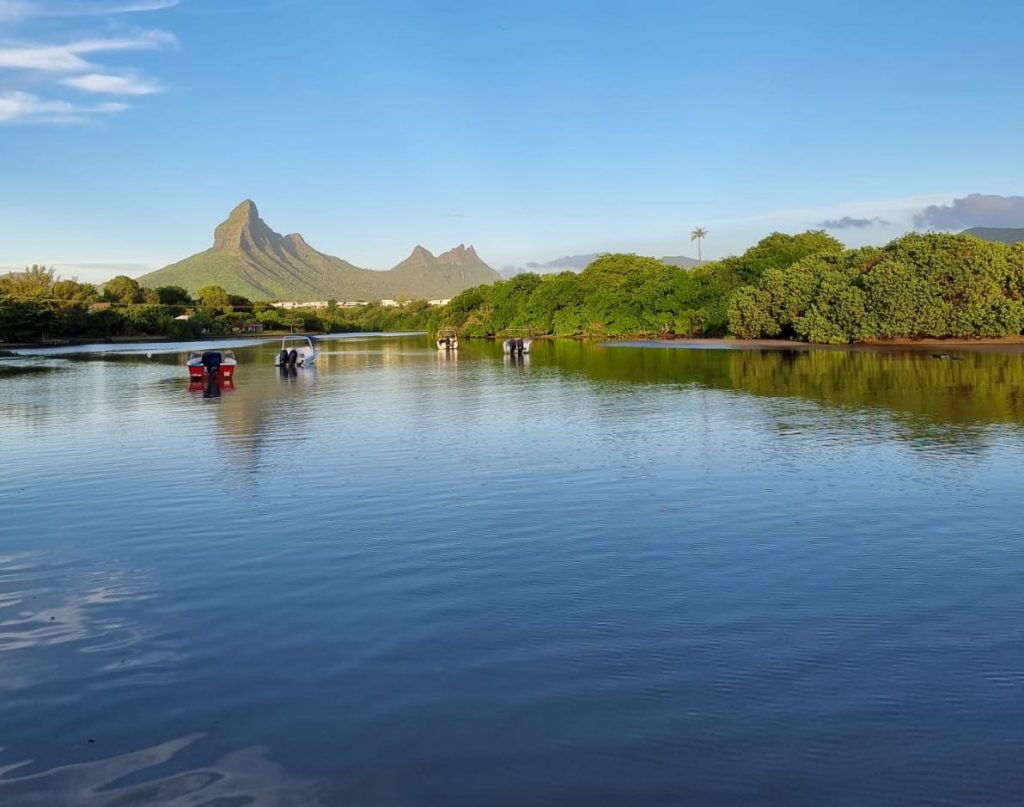
Tamarin Bay, District of Black River, Mauritius with a view of Rempart Mountain. Photo by Khalil Walji.

Mauritius is famed for its crystal-clear waters and white sandy beaches. This beautiful island is also characterised by a high number of endemic species found nowhere else in the world.

One of the most critical landscapes, and key to the Mauritius from Ridge to Reef (R2R) project, is the Black River Gorges National Park. Covering an area of around 6,500 hectares, the park is home to many of the island’s rarest species, including the Mauritius kestrel, the pink pigeon, and the echo parakeet. In a broader context, Mauritius forms part of the Southwest Indian Ocean Biodiversity Hotspot, in what is known as the Mascarene Archipelago, globally admired for its large numbers of endemic plant and animal species.

Many of these ecosystems are, however, being degraded by deforestation, land-use change, and invasive species, which have seen native forest areas diminish significantly since 1835. At present, they cover only 2% of their previous range, and 89% of endemic flora are considered threatened with extinction.

Who’s who

The responsibility to conserve and expand these globally relevant ecosystems is placed on the shoulders of the team from the National Parks Conservation Services (NPCS), which was established in 1994 to manage the native terrestrial biodiversity of Mauritius and to retain its genetic diversity for future generations.

About R2R

The Mauritius from Ridge to Reef project works in various national parks around the island, including the Black River Gorges National Park (BRNP), Bras D’eau, and Ile Ambre where the project is principally focused on restoring and increasing native forest cover. Here the R2R will focus on the removal of invasive species, the replanting of indigenous and endemic species, and the reforestation of non-forested areas outside the national parks, in the catchment area around the BRNP where state-owned agricultural land is leased to farming communities. These areas are targeted for the expansion of indigenous forest cover through “steppingstones” or connectivity corridors and will require the engagement of farming communities. The project is also targeting mangrove areas immediately surrounding the shores of the island to improve mangrove health to act as a protective shield and buffer against sea-level rise. Healthy mangroves further support the creation of fish nurseries and improve the availability of animal protein and food security for the local population.

What we learned

One of the core activity areas of the Central Component is gathering the knowledge and lessons generated from the implementation of the 22 ILM projects in the programme. With this, we assess where we can support the LFF projects, and identify experiences that might be of use to other projects in the programme (what we call “cross-learning”). 

The NPCS is primarily focused on conservation and restoration within national park boundaries. The ambitions under the R2R project are an expansion of their mandate and intention to work with diverse actors across the island to enhance and to extend their goals. This will require the deployment of mediation, institutional flexibility, and convening capabilities to achieve ILM outcomes. Here is a sample of our findings about the project they lead, centred around the six ‘dimensions’ of ILM we have identified. 

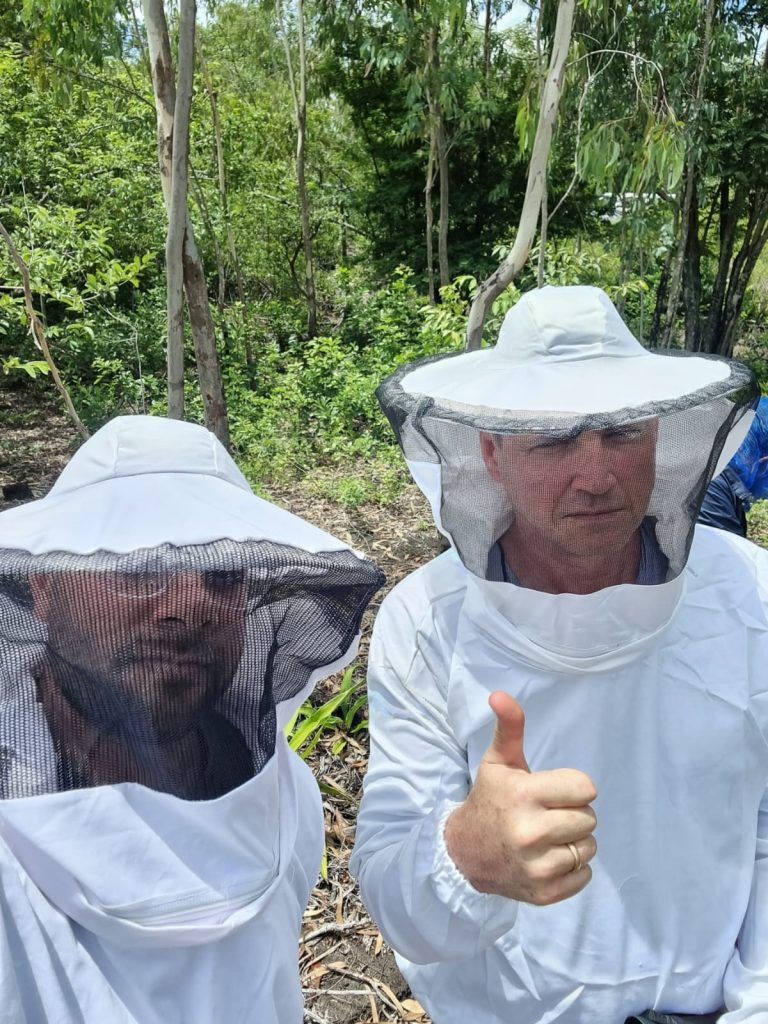
Pictured: Khalil Walji (left) and Kim Geheb (right) give the bee-keeping outputs an earnest thumbs-up.

Stakeholder identification

The project collaborates with several key stakeholders across the landscape including partners in various government ministries, NGOs, and academia. The first event to engage stakeholders in the project was a workshop held during the visit of the Central Component (CC) which provided an overview of project objectives and worked to create a unified common vision for Mauritius. The project does not have a fully-fledged Theory of Change (ToC) to guide project implementation. ToCs are important, because they can help projects to theorise the strategies and approaches that they will use to generate outcomes. For the LFF, outcomes represent behavioural changes: stakeholders do things differently, to support the R2R project’s objectives, and to maximise the value that it brings. To achieve this, all projects need to have a good understanding of the stakeholder landscape, and the relationships between them.

The CC uses an approach called Net-Mapping to map out stakeholders and the dynamics amongst them to inform the creation of a Theory of Change.

Find out more here.


Multi-stakeholder fora (MSF)

An MSF has not been created for the R2R but is acknowledged as necessary for the success of the project, especially given the number of relevant government ministries and project partners. In lieu of creating a new forum, the potential to exploit existing spaces for dialogue is being explored. One promising option is a new Inter-ministerial Forum for Climate Change, which could act as a platform for integration.

A critical aspect of the successful function of an MSF is the skill sets needed to convene, mediate and engage stakeholders. The NPCS team does not at present have this in-house capacity but would seem very keen to bring in these skill sets, as well as look to the project partners, who may be best placed to co-convene and facilitate this forum.


Common vision 

The R2R project did not have a commonly-agreed-upon vision for its landscape. During a one-day workshop with 40+ participants, project stakeholders began to define a common vision for the R2R project. A co-created vision can be immensely powerful as a ‘north star’ behind which project stakeholders and activities can be organized.

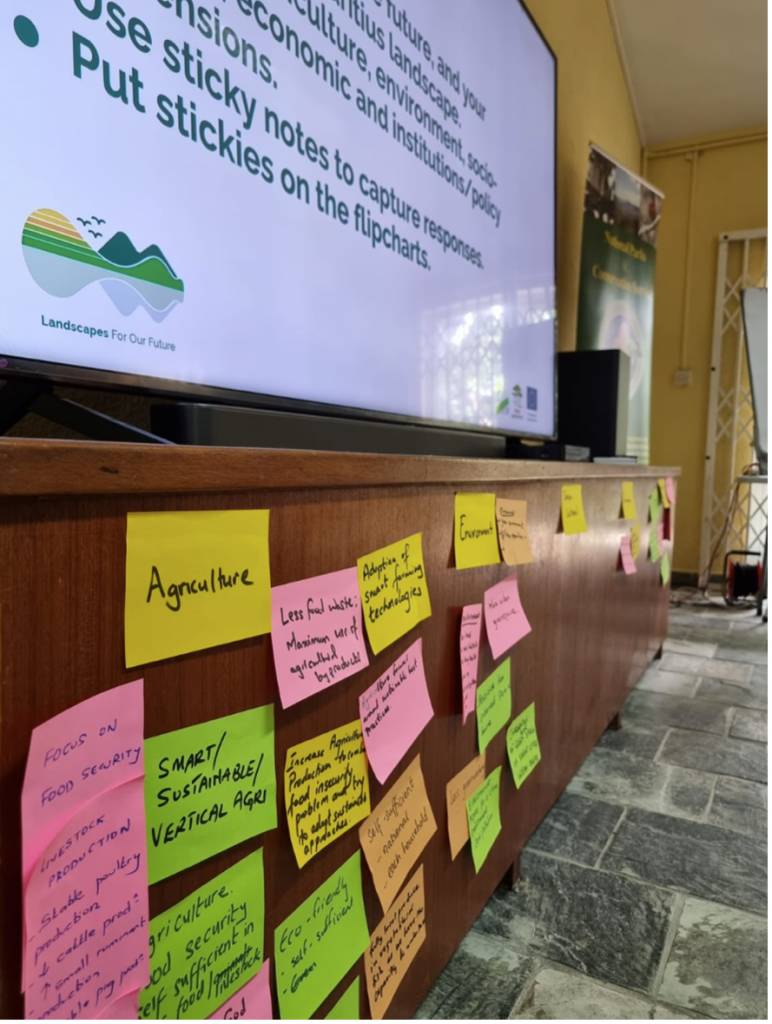
Participants were asked to explore their vision for Mauritius 10 years into the future and to consider agricultural, economic, and environmental dimensions. Group discussions were held to further flesh out common challenges to achieve this vision and who needed to work together to arrive at this future state.

A circular blue and green economy in Mauritius that supports linking the environment with livelihoods through:

  • A sustainable and productive agricultural sector that enhances food security and self-sufficiency.
  • Environmental management across all land uses with less waste and more renewable energy.
  • A diversified economy that operates within biophysical boundaries and supports equity and better lives for all.
  • Harmonization of policies and legislation with better enforcement and supporting greater awareness, inclusion, and empowerment of people in decision-making for environmental outcomes.”

– The proposed vision for Mauritius, which emerged from the workshop.
(This vision was not endorsed and is presented as a working draft.)

👉 Explore the post ‘6 Ingredients to ILM’, which features the key aspects of defining a common vision.


Institutionalization 

The NPCS and R2R is well institutionalized into the Mauritian government, given their role as service under the Ministry of Agro-Industry and Food Security. Although they are well placed, the creation of an MSF should also be developed with sustainability in mind, to ensure it serves as a common space for dialogue for the R2R, but beyond it as well.


Iterative and adaptive management

It is early days for the project, but the NPCS team’s experience suggests that it has well-established systems to monitor project interventions and progress. How these systems are used in the iterative and adaptive management of the programme is less clear. The CC suggested these areas should be prioritized through annual technical and steering committee meetings, as well as prioritizing the monitoring and feedback to enable the team to course-correct where necessary.


Technical solutions and tools

The project’s knowledge of its biophysical and ecosystem conditions is high. Its in-house and project-based systems for monitoring these trends are well established, although they indicated the need for increased capacity, and systems that can be better used for adaptive and iterative management and to generate evidence to inform policy at higher levels.