The European Union’s Landscapes for Our Future programme supports 22 integrated landscape management projects across 19 countries and 3 sub-regions across the Global South.
Real-world lessons from landscapes – plus what's coming up in 2026.
Dominique le Roux
11/02/2026
Insights from ILM in action
We were delighted to receive authorisation to extend our work into a no-cost extension (NCE) period that will see us formally ending the Central Component in September 2026. This gives us room to breathe, think, consider and consolidate our learning from four surprising and revealing years, while still offering support to LFF projects that have themselves been granted NCEs.
So, what have we got planned?
Our work is currently dominated by two major outputs:
‘Global learning’ work – Our teams have been visiting most of the LFF projects, using a consistent methodology, to explore the ways in which each project has inclined towards ILM: the ways in which they have understood it, negotiated it, and the skills and strategies they have utilised to obtain it. I think this is going to be a very insightful product. The team has been dialoguing a lot on how we’re going to analyse this huge body of data, while still being sensitive to the perspectives and knowledge of the individual project teams. I see this exercise as advancing understanding of ILM and how it can be successfully achieved. Shout-out to the pair leading this initiative, Valentina Robiglio and George Schoneveld!
Then there’s the ILM Playbook. For me, this has been – and continues to be – a labour of love. My relationship with the AI tool, Claude, has flourished – I have found him (it?) an indispensable foil – to debate and argue with. My conversations with him run into the gigabytes.
What will the Playbook be? It is intended to fulfil several roles: an online course for would-be ILM practitioners, a bedrock for our accumulated understanding of what we have learned from the LFF, and a provocation to existing ILM practitioners. Whatever the case, it will be designed and, we hope, used to inspire new thought and reflection – and to advance a global ILM agenda.
And then there’s the plus, plus, plusses: additions to our Landscapes in Practice series, case studies and thematic papers, a series of country briefs, and a number of events that we are still discussing.
The next seven months will be busy and rewarding, and we look forward to sharing these outputs with you all. In the meantime, may 2026 be your ILM year!
– Kim Geheb Coordinator Central Component
Aha! What LFF taught us
As the Central Component, we spend a lot of time talking about co-learning and co-creation – about arriving in landscapes with curiosity rather than prescriptions. But as the Landscapes For Our Future programme comes to a close, we turned the question inward.
What surprised us?
Perhaps it was the penny dropping in Laos that strong team dynamics really matter when it comes to applying andadapting ILM, or perhaps it was the realization in Vietnam that sometimes landscape solutions need to be found from well outside the landscape. Perhaps it was seeing in Papua New Guineathat ILM has significant peace-building potential, or in Brussels, that ILM can be a really powerful way of heading off the unintended consequences of large-scale infrastructure projects.” – Kim Geheb
LFF showed me that you don’t transform landscapes ONLY by rolling out innovations – as necessary as these are. By aligning people, incentives, and power, these innovations can succeed over time. Our innovations succeed when they’re human-led — when they start with listening and trust – and the technical solutions then follow.” – Khalil Walji
For me, the main takeaway is that ILM succeeds when it stays grounded in real-life needs, remains flexible in practice, and puts people at the centre – not just in principle, but in delivery.” – Divine Foundjem
I think that ILM is not about great project design. What generates a good ILM performance is probably something we do not talk about explicitly: the relational aspects.” – Valentina Robiglio
One key ILM insight for me is that trust and process matter more than tools.” – Natalia Cisneros
I think my most significant lesson is that ILM is fundamentally a multicomponent process… Conceptualizing how integration worked across these dimensions pushed us to see the dimensions more as strands in a larger thread that wound around and supported the collective whole.” – Peter Cronkleton
What does it take to bring diverse actors together in fragile, contested landscapes?
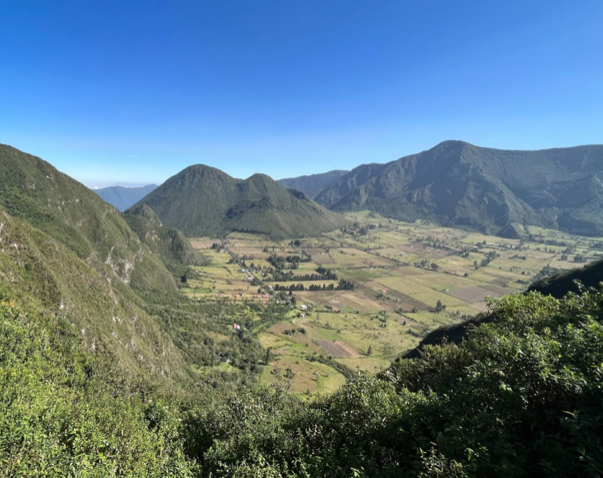
In a parish in Ecuador, the answer turned out to be water.
This case study shows how a shared concern became a catalyst for collaboration – helping government, communities, and technical partners align priorities, build trust, and turn Integrated Landscape Management from concept into practice. While grounded in one place, the lessons are highly transferable.
If you’re navigating fragmented governance, local capacity, or the challenge of turning strategies into action, you’ll find practical insights here – wherever you work.
When governance doesn’t exist, how do you make ILM work?
What does it take to practice ILM where there’s almost no permanent state presence, weak institutions, and deeply unequal power dynamics?
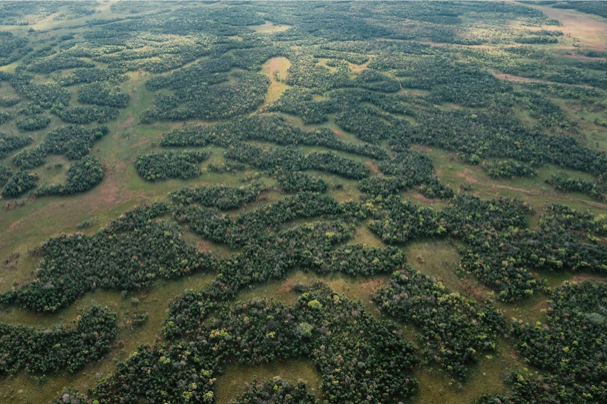
In Paraguay’s northern Chaco, the answer wasn’t perfect plans – it was adaptive learning, neutral facilitation, and creative coordination in a governance vacuum. The CERES project helped establish the first sustained collaborative processes in a landscape long managed at a distance, showing how small, pragmatic steps can unlock durable institutional change and bring unlikely partners together.
If you’re working in contexts where governance is fragile, actors are distant or disconnected, or power imbalances are the norm, this case study offers practical insights on sustaining momentum, building legitimacy, and anchoring collaboration without waiting for ideal conditions.
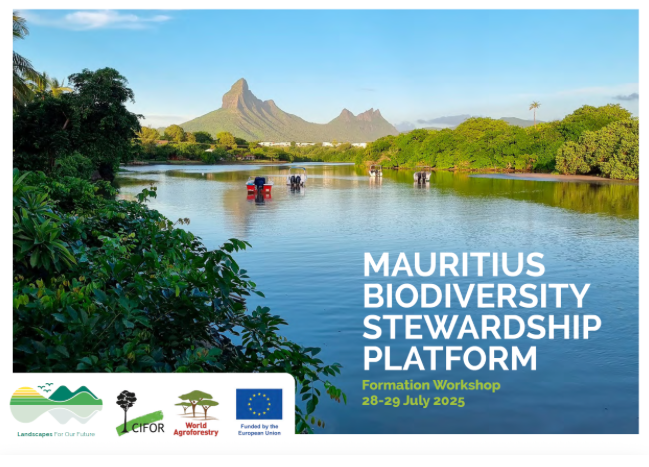
Our report on the Mauritius Biodiversity Stewardship Platform formation workshop goes beyond documenting an event – we wanted to capture a practical blueprint for building multi-actor platforms by using inclusive methods that surface diverse perspectives and move groups from dialogue to concrete action.
Even if you’re working in a different landscape, you’ll find actionable ideas for designing collaborative processes that build trust, generate momentum, and translate participation into implementation.
This short post is a great reminder of why we invest in ILM in the first place: landscapes are systemic, and so are the challenges we face — from food insecurity to climate vulnerability. By bringing farmers, governments, communities and the private sector together around shared resources like land and water, ILM strengthens food systems, livelihoods and resilience in ways that sector-by-sector approaches simply can’t.
This special feature collection highlights a big lesson for the research–practice interface: there are still critical gaps in how integration is defined, studied, and reported, especially around politics, power dynamics, gender dimensions and local knowledge. A key takeaway is that learning from implementation and empirically documenting what works (and why) remains essential to advancing ILM as both a practice and a field of study.
This resource underscores how infrastructure planning and biodiversity outcomes are deeply connected. It offers practical guidance on how developers and governments can design infrastructure that supports ecological functions — a reminder that ILM isn’t only about social processes, but also about building systems that are sustainable from the ground up. (No citation available online but draws on best-practice principles.)
Early evidence from Peru suggests that popular conflict-resolution mechanisms — like dialogue spaces — may not always shorten conflicts. In some cases, they can prolong engagement if credibility, capacity and broader institutional support are weak. The insight here for landscape practitioners is that mechanisms for dialogue need careful design and legitimacy to help transform conflict, not just host it.
Power and its discontents: The long road to systemic change in the aid sector This article challenges the myth that incremental shifts in practice alone will rebalance deep power inequalities in development systems. While localisation and “shift-the-power” initiatives are gaining ground, the authors argue that meaningful, systemic change requires transforming where decision-making and financial power actually sit, not just boosting local participation in existing structures. It’s a crucial insight for anyone committed to genuine co-creation.
From data and dimensions to “aha” moments: what LFF taught us
As the only non-scientist on the team, it's been fun to watch my Central Component colleagues going "soft" ? over the course of this programme.
Here's what surprised them.
Dominique le Roux
30/01/2026
We, as the Central Component, talk a lot about “co-learning” and “co-creation”. From the start, our intention has been to arrive in landscapes not as experts with answers, but as partners with questions – listening first, and learning alongside communities, institutions, and practitioners.
As the Landscapes For Our Future programme draws to a close, we’ve been turning that lens inward and reflecting on our own insights about Integrated Landscape Management (ILM) – the things that only became clear through practice. Not the concepts we might have confidently shared at inception, but the penny-drop moments that emerged through real-world engagement across continents: from Bolivia to Burkina Faso, Cambodia to the Caribbean, Laos to Zimbabwe…
What strikes me about their reflections is how consistent they are. Again and again, my scientist colleagues point to the same underlying truth: that transformation is not driven by tools, detailed frameworks, or perfect project design. Instead, they highlight that progress hinges on trust, relationships, leadership, and process. Technical innovation matters – but only when it is carried by human systems that are aligned over time. Landscapes change when people change their behaviour together.
These reflections capture how ILM revealed itself in practice: as a living, multicomponent process; as something that unfolds through dialogue and adaptation; and as work that succeeds when multiple enablers – social, institutional, and technical – come together. They remind us that what matters is not only what we do in landscapes, but how we do it.
Kim Geheb
For me, 2025 was an incredibly busy year. I visited São Tomé and Príncipe, was in Belgium meeting our colleagues at the European Commission, and visited Papua New Guinea, Vietnam, Laos, Cambodia, and out into the middle of the Indian Ocean to Mauritius. Then, I went into Southern Africa to visit the project in Zimbabwe and across the world to visit Peru, and of course, also sites here in Kenya. I don’t think I’ve ever visited so many countries in a single year of my life.
In virtually all cases with these visits, we were having workshops and meetings together with our project teams, and it’s hard to say which of the surprises I encountered was greater than the others.
Perhaps it was the penny dropping in Laos that strong team dynamics really matter when it comes to applying and adapting ILM, or perhaps it was the realization in Vietnam that sometimes landscape solutions need to be found from well outside the landscape. Perhaps it was seeing in Papua New Guinea that ILM has significant peace-building potential, or in Brussels, that ILM can be a really powerful way of heading off the unintended consequences of large-scale infrastructure projects.
I don’t really know which of these was the greatest surprise, but I think they are all really valid, and they all contribute towards understanding ILM and its immense potential.
Khalil Walji
One of the biggest things I learned through Landscapes For Our Future is that innovation in restoration isn’t really technical; it’s human.
We had the science and the frameworks. We had the tools. What made the difference was whether people trusted each other, whether institutions worked together, and whether communities had real ownership.
Where we’ve seen real progress and lasting impact, it wasn’t because we designed a perfect model; rather, it was in the landscapes where leadership was expressed and relationships built – this meant that tensions could be navigated, and solutions co-created around real constraints – through a process.
LFF showed me that you don’t transform landscapes ONLY by rolling out innovations – as necessary as these are. By aligning people, incentives, and power, these innovations can succeed over time. Our innovations succeed when they’re human-led — when they start with listening and trust – and the technical solutions then follow.
Peter Cronkleton
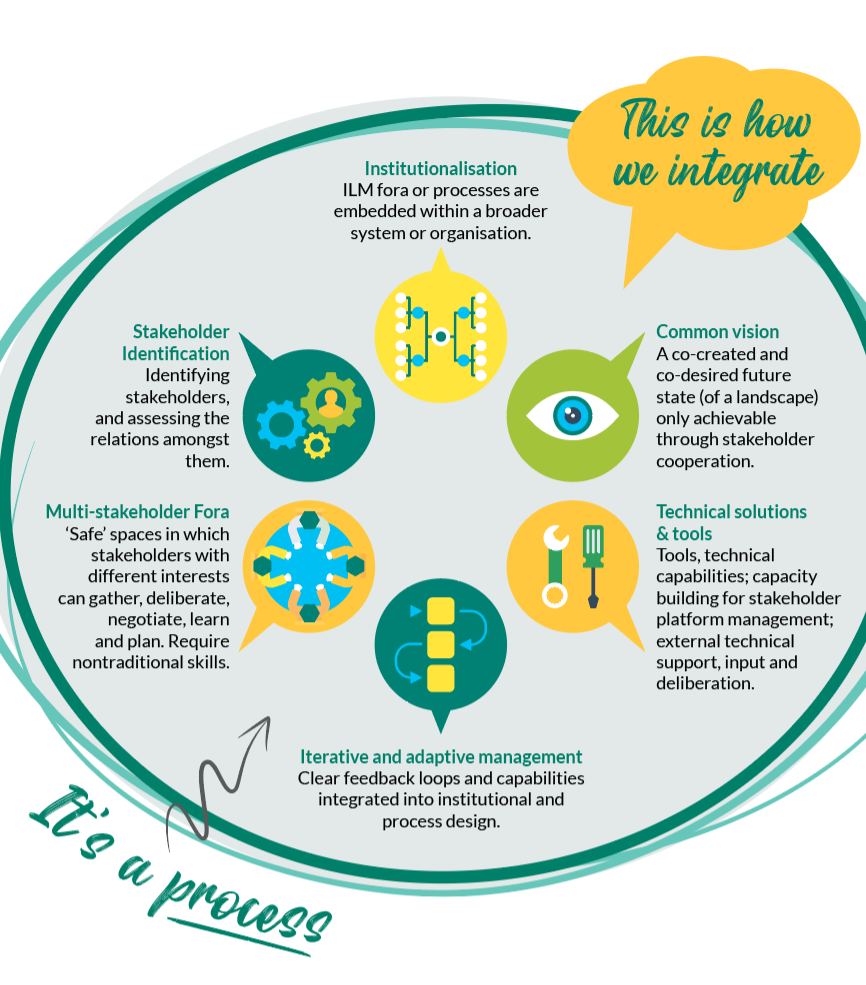
I think the most significant lesson I have learned through the LFF programme has been to understand that ILM is fundamentally a multicomponent process.
We started LFF by defining the ‘dimensions’ of effective ILM, which were usually depicted as six static fields. However, as we worked on describing ILM cases, it was clear that, rather than discrete finite topics, each dimension included elements of change, so interactive feedback needed to be included in how these concepts were depicted.
We realized that, rather than talking about multi-stakeholder platforms, we needed to think of multi-stakeholder processes. While the iterative learning/adaptation dimension clearly entailed a temporal aspect, as we tried to describe how this worked, we could see how iterative learning and adaptation crosscut and influenced other dimensions.
Conceptualizing how integration worked across these dimensions pushed us to see the dimensions more as strands in a larger thread that wound around and supported the collective whole.
Seeing ILM this way serves as a reminder that we need to work across all the dimensions and, if done well, that integration leads to effective management.
Natalia Cisneros
One key ILM insight for me is that trust and process matter more than tools.
In Simiátug, Ecuador, water helped align diverse actors and build a shared vision where fragmentation previously dominated. ILM advanced not through technical solutions alone, but through legitimate spaces for dialogue and adaptation over time.
Valentina Robiglio
I think that ILM is not about great project design. What generates a good ILM performance is probably something we do not talk about explicitly: the relational aspects. So those projects that built trust and were present in the landscape before the project began had a head start through their social capital – their understanding and knowledge.
Also, we must look at participation and negotiation. But how do you invest in the ‘soft skills,’ which are generally undervalued? On the one hand, we have facilitation, staff continuity, and learning in teams. And on the other we have flexibility and adaptability in the management. So I think that is interesting. Or, to frame it differently: what is important is not only what you do but how you do that. So how do you create conditions and capacities for adaptation and learning that pay off in the long-term?
And then another thing that has been noticeable is that success factors cluster. So you do not just target or fix one thing – like lack of capacity, alignment of policies, institutionalisation… ILM projects that have really succeeded have been the ones with multiple enablers working together.
Again, we go back to this relational structure across processes that allows for flexibility and continuity. This relates very much to systems thinking.
Divine Foundjem
One of the biggest things I learned through Landscapes For Our Future is the extent to which ILM only works when it responds directly to real problems on the ground.
Across Cameroon, Burkina Faso, and Senegal, I saw how the same underlying livelihood challenges play out differently – sometimes as conflict, sometimes as forest encroachment. It taught me that, unless projects respond to people’s everyday realities, success becomes very difficult. I was impressed, though, by how eager communities and projects to learn about what determines success – they wanted to ensure these were built into the project designs.
Another key insight was the importance of building a shared vision: where communities and project teams defined problems and solutions together, progress followed.
I was also struck by how critical adaptive management is. In Burkina Faso, plans had to change when groundwater could not be accessed, and teams adjusted their approach to find alternatives that worked for communities. That flexibility made a real difference.
What also stood out for me was how motivation grows when people can actually see tangible benefits. As livelihoods improved, participation increased and pressure on forests decreased.
Finally, I learned how powerful multi-sector collaboration and local ownership can be. When different government actors work together, and communities are involved from design through implementation, projects gain momentum.
For me, the main takeaway is that ILM succeeds when it stays grounded in real-life needs, remains flexible in practice, and puts people at the centre – not just in principle, but in delivery.
Summary: the lessons we’ll carry forward
Across all these reflections runs a common thread: ILM is fundamentally relational.
Whether seen through the lens of peace-building potential, multistakeholder processes, or restoration efforts rooted in trust, the message is clear. Lasting impact does not come from rolling out innovations in isolation. It comes from investing in people, building shared ownership, navigating tensions, and creating space for learning and adaptation over time.
The Central Component team’s observations reinforce that ILM works best when its dimensions are understood not as static components, but as interconnected strands that strengthen each other.
Success clusters. Social capital matters. Leadership and continuity matter. Legitimate spaces for dialogue matter. And so do the often-undervalued “soft skills” that enable flexibility, participation, and long-term resilience.
Perhaps most importantly, these insights affirm why co-learning sits at the heart of ILM. By showing up with curiosity – and staying open to being surprised – we deepen not only our understanding of landscapes, but also our understanding of ourselves as practitioners.
As we close this chapter of the programme, these are the lessons we carry forward: start with listening, centre relationships, align incentives and power, and let technical solutions follow.
ILM, in the end, succeeds when it is human-led.
Facilitating with respect: Lessons from Zimbabwe’s Lowveld
When Lemson Betha first arrived in Zimbabwe’s southeast Lowveld to work as a facilitator for SAT-WILD, he was stepping into unfamiliar territory: he hadn’t grown up in the region, and didn’t speak the local language. But he knew that building trust would be the foundation of any successful work.
Dominique le Roux
30/09/2025
Today, the Sustainable Integrated Landscape Management in the Gonarezhou National Park and surrounding communities project is regarded as one of the strongest role models amongst the 22 projects in the Landscapes For Our Future programme, not because SAT-WILD and the other project partners had all the answers from the start, but because they have remained committed to facilitation, co-creation, and adaptive learning. Lemson’s reflections below offer invaluable guidance for anyone working with communities on complex, long-term landscape challenges.
Learn directly from Lemson or read the summary below:
Begin with respect
For Lemson, the starting point is simple but powerful: treat communities as equals. “View them as people with the same potential and capability in achieving goals,” he says. Respect isn’t just an attitude – it’s also shown through action.
That means recognizing and following local structures. Traditional leaders such as chiefs and headmen hold important roles, and there are established cultural protocols for introducing yourself. “If you don’t follow their procedures, you’ll struggle to penetrate those communities.”
Respecting these systems signals humility and seriousness. It opens the door for collaboration rather than confrontation.
Work through local voices
Language can be a barrier – or a bridge. Lemson speaks Ndebele and Shona, but in Gonarezhou most people use Tsonga or Shangaan. Rather than seeing this as an obstacle, he teamed up with colleagues from the area who can translate and explain cultural nuances.
Communication, he stresses, isn’t just about words. It’s about ensuring that everyone understands, feels included, and sees themselves in the process. That often requires adapting your methods.
Make it practical and participatory
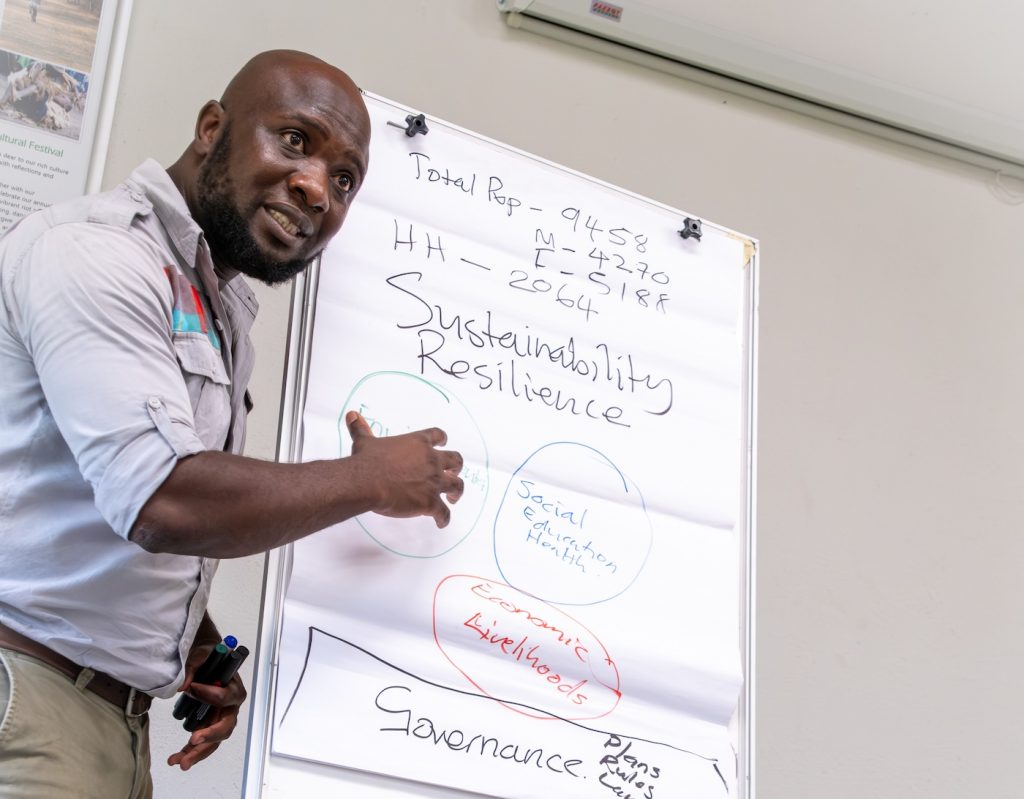
“We are not there to deliver PowerPoints,” Lemson says with a smile. In communities where abstract diagrams don’t resonate, SAT-WILD uses props and local metaphors.
A sponge becomes a model of resilience – it can be squeezed but always bounces back, and it holds water for future use.
A three-legged cooking pot illustrates sustainable development: social, environmental, and economic “legs” must all be balanced, while governance provides the base.
By drawing on everyday objects, facilitators turn complex concepts into something tangible, memorable, and actionable. Group work, illustrations, and hands-on activities ensure that knowledge is not just shared but co-created.
Value indigenous knowledge
Too often, practitioners treat communities as “empty jars” to be filled with external expertise. Lemson rejects this model. “They already have water in their jars,” he insists. Communities bring rich indigenous knowledge and lived experience that must be woven together with scientific and technical insights.
By asking “What do you know about this?” facilitators create space for dialogue. That blending of perspectives doesn’t just build better solutions – it builds ownership. And ownership is what makes projects last beyond donor cycles.
Stay flexible
Development timelines are often tight, but rigid schedules rarely work on the ground. Community events, ceremonies, or farming activities may clash with planned workshops. Lemson’s advice: don’t force it.
“Be flexible to change, tailor-make activities to fit into their plans, and work with them,” he says. “We are not at war. We are one big family wanting to achieve greater work in the landscape.”
Facilitate for co-creation
Ultimately, Lemson sees his role not as leading but as facilitating. SAT-WILD doesn’t claim the project as its own. “It’s not our project – it’s their project,” he explains, referring to the communities and other partners, including Malipati Developmentt Trust, Ngwenyeni Community Environment & Development Trust, local Authorities, Gonarezhou Conservation Trust, Manjinji Bosman’s Community Conservation and Tourism Partnership and SAT-WILD “We are just coming as facilitators, working with them.”
That mindset transforms relationships. It shifts from top-down instruction to shared problem-solving. It builds resilience not only in communities but also in the partnerships that support them.
Conclusion: A role model for ILM
For practitioners working in Integrated Landscape Management, Lemson’s advice is clear: respect local structures, adapt communication, make learning practical, value indigenous knowledge, and remain flexible.
It sounds simple – and in many ways it is. But doing these things consistently, with patience and humility, is what allows trust to grow. And trust, as SAT-WILD’s experience shows, is the foundation of lasting change.
Landscapes in Practice: Iterative learning and adaptation
Integrated Landscape Management (ILM) entails dealing with complexity and uncertainty, of which the interests of diverse stakeholders are an important part. Management strategies such as Adaptive Management and Collaborative Management have emerged to address these challenges and have been operationalized as an approach called Adaptive Collaborative Management (ACM).
This Landscapes in Practice edition aims to offer an overview of the common themes and concepts across these approaches, identifying lessons and proposing ways in which they can contribute to an ILM process. It will also synthesize steps to incorporate iterative learning processes and adaptation into ILM-focused programmes and projects. Ultimately, our goal is to explain key concepts and identify essential steps for practitioners who employ an ILM approach to develop the critical pillars of iterative learning and adaptation within their project cycle.
Key messages
Iterative and adaptive learning are seen as key characteristics of effective Integrated Landscape Management (ILM) initiatives, yet ILM implementers may need support to operationalize iterative learning and adaptation in their programmes.
Given that landscapes are highly complex and dynamic socio-ecological systems fraught with uncertainty over how they function, interact and react, stakeholders involved in management should adopt a ‘learning by doing’ approach to identify best practices and improve over time.
Adaptive management is an approach that treats management as an experiment that tests interventions based on available information, and evaluates outcomes to adjust future management decisions and actions.
By convening stakeholders to work together towards a common goal (to collaborate), and by promoting social learning (developing a shared understanding within groups), ILM facilitators can encourage an iterative approach to planning and decision-making to better manage complexity in a changing world with many unknowns.
There are four steps that can assist in operationalizing this concept in ILM: stakeholder engagement, problem/objective definition, action planning, and monitoring/reflection (then back to action).
From conflict to collaboration through inclusive landscape governance: in this new paper, James Reed and fellow authors describe an engagement and visioning experience in Northern Ghana that holds lessons for ILM practitioners in so many other landscapes.
Dominique le Roux
03/09/2024
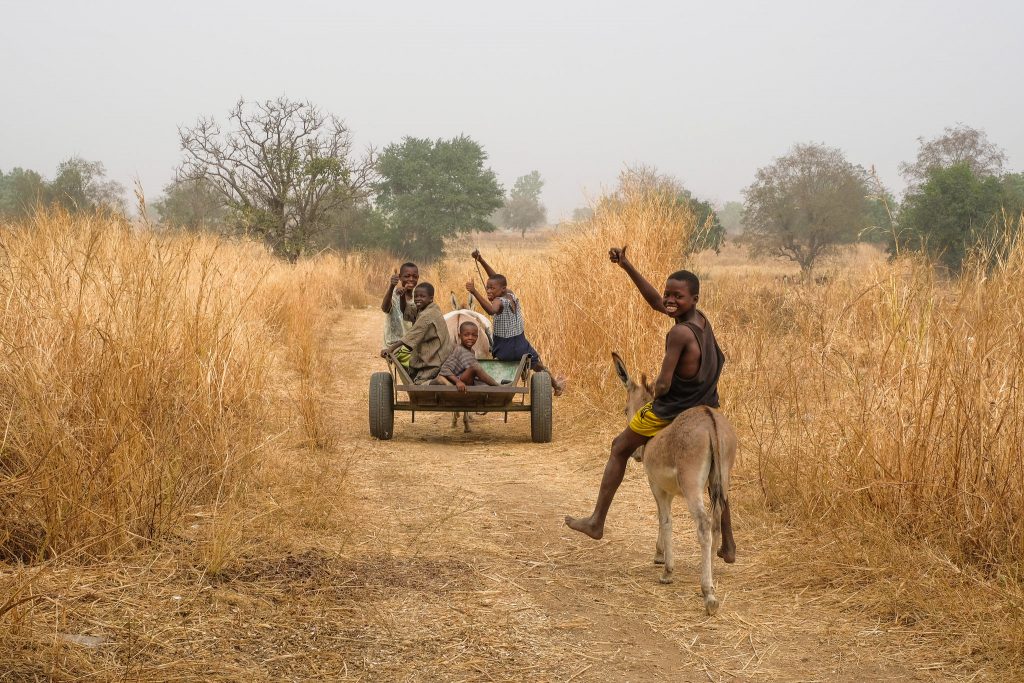
Donkey transportation in Northern Ghana.
Photo by Axel Fassio/CIFOR
These engagement processes enabled stakeholders to reflect on their contributions and the historical and contemporary challenges obstructing landscape resilience and sustainability. Despite the contested nature of land and natural resource use, stakeholders were able to agree on specific issues of common concern and an idealized shared vision of a future landscape… We expect that the theory of change model and recommendations within can inform the development of a sustainable landscape management plan and future evidence-based policy.
Reed et Al.
The Western Wildlife Corridor (WWC) in Ghana’s Northern Savannah ecological zone is a contested landscape where efforts to reverse widespread environmental degradation often conflict with local livelihood concerns and broader development objectives. Despite policy measures to devolve natural resource decision-making authority, poor environmental management, persistent socioeconomic challenges, and increasingly limited livelihood op- portunities for people living within the corridor prevail. This study investigates environmental degradation in the WWC and natural resource governance using information on stakeholder perceptions from stakeholder work- shops, focus group discussions, and key informant interviews. We also explore how natural resource management might be strengthened to better deliver social, economic, and environmental goals. We found that despite a history of contestation, stakeholders were able to agree upon specific issues of common concern and generate a collaborative vision for the WWC landscape. Transitioning toward such a vision requires significant investment in strengthening current governance structures and building natural resource management capacity within the corridor and beyond. Furthermore, persistent challenges of conflicting stakeholder objectives and issues related to coordination, corruption, and non-inclusion in decision-making about natural resources must be addressed to advance progress. Stakeholders were able to formulate specific recommendations and a participatory theory of change to inform the development of a sustainable landscape management plan and future evidence-based policy that could steer the WWC toward a more resilient and multifunctional system that equitably supports livelihoods, biodiversity, and wider economic development. The methods for inclusive engagement in environmental decision-making are extrapolatable to other contexts facing similar social-environmental challenges.
Moreover, sector-specific discussions and group negotiations helped formulate concrete short-, mid-, and long-term objectives and specific actions, interventions, and a suite of potential solutions to current barriers that combined could help to reorient and transform the governance and management of the WWC. These recommendations enabled us to generate a working theory of change for the WWC landscape that will be shared and validated with a broader group of stakeholders, including those not present at the workshops.
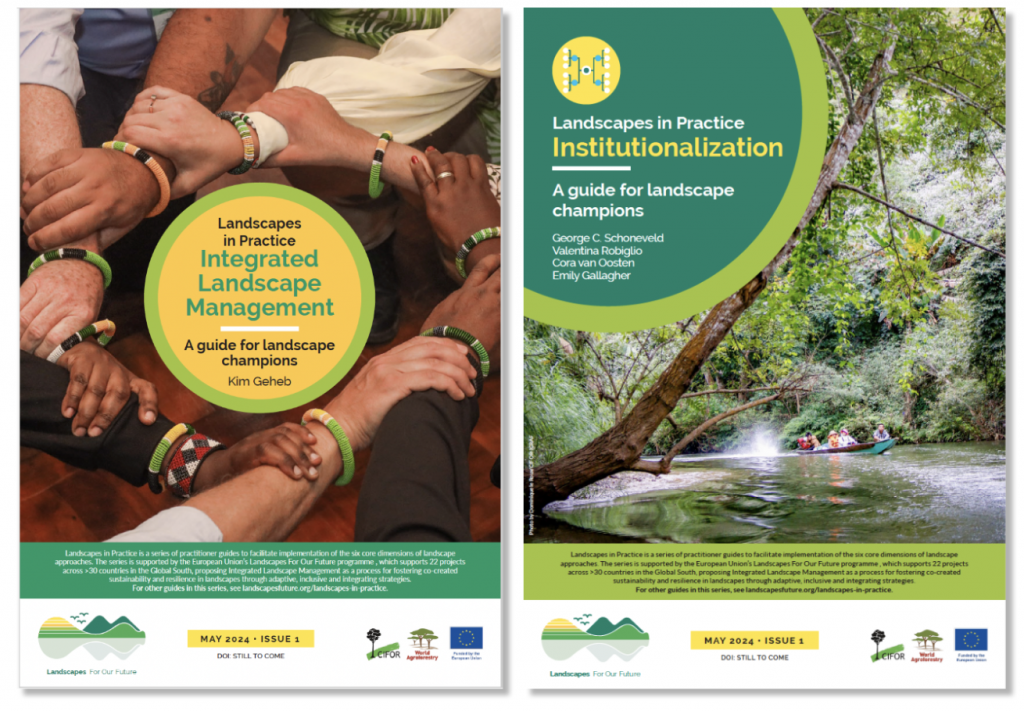
Conversations about power and the launch of our new series of 'Landscapes in Practice' guides for people like you: landscape champions.
Dominique le Roux
27/05/2024
Our landscape champions are those everyday heroes applyingIntegrated Landscape Management in places and spaces around the globe, and the researchers, strategizers, policy makers and funders who advocate for the process.
Sound like you?
Read on for honest conversations about power, a new series of practical guides for people like you, and the communities of practice groups we’re setting up for you to collaborate and commiserate with your peers.
CONVERSATIONS
Let’s talk power!
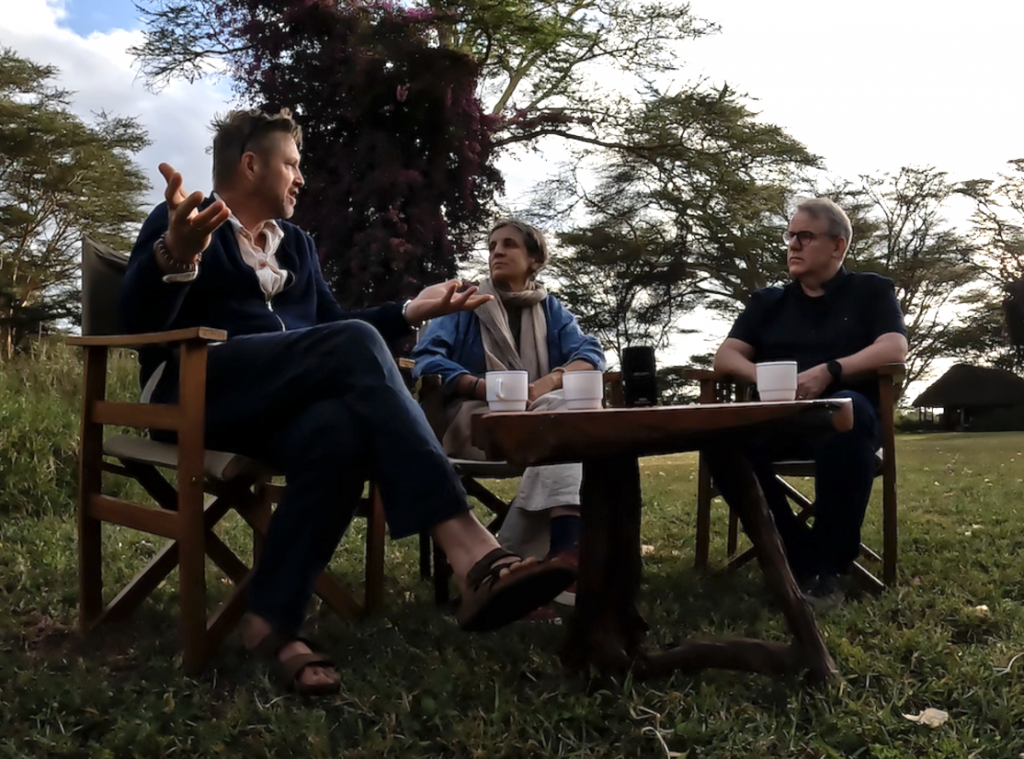
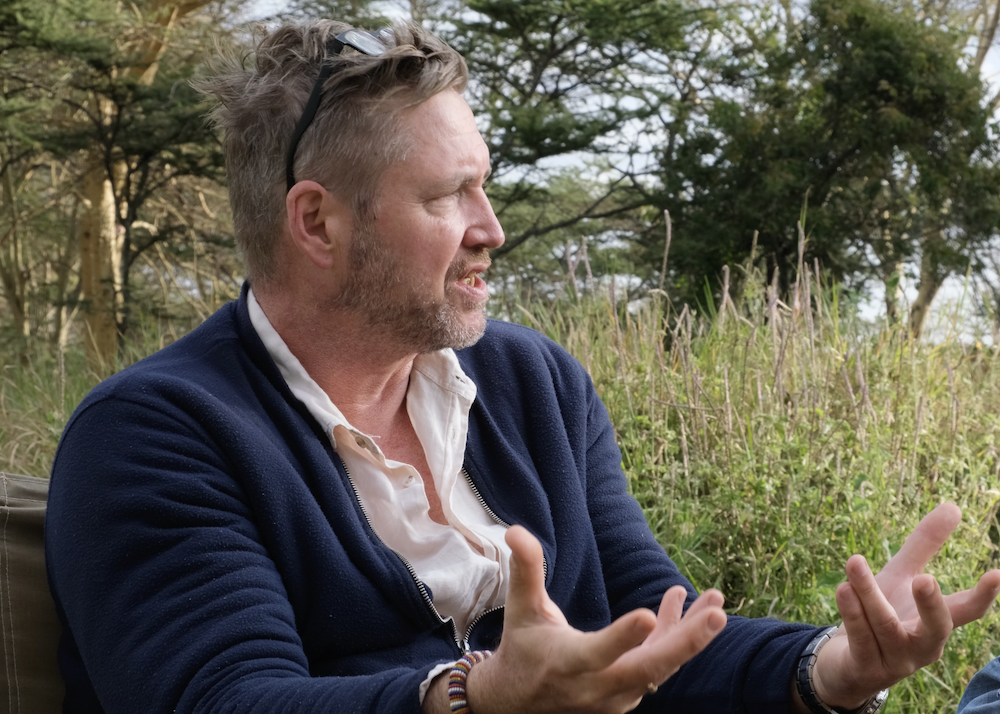
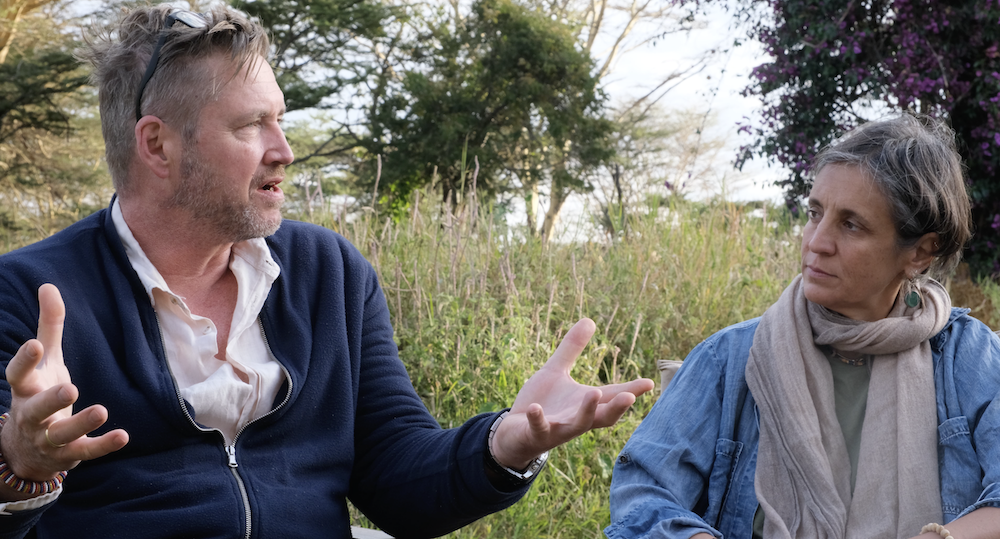
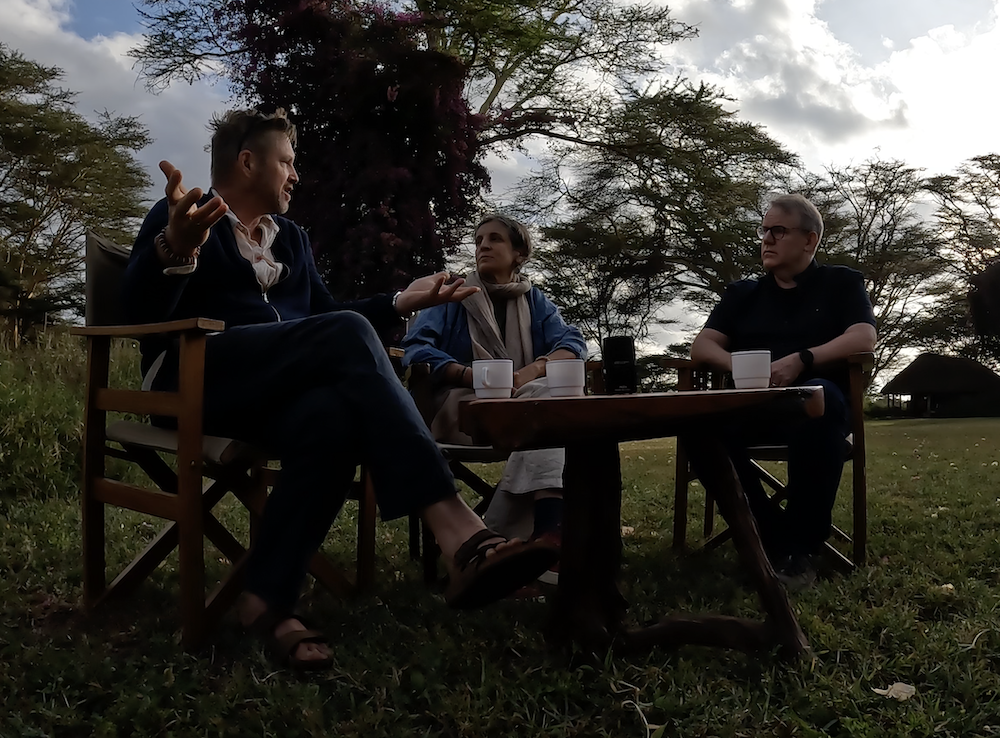
One memorable morning in northern Kenya, the dawn coffee conversation turned to a topic that rears its head all the time but is very rarely addressed directly. We invite you to settle in amongst the din of the cicadas and eavesdrop on that conversation between members of the Central Component as we chat about that ‘dirty’ word: power.
We, the Central Component, are tasked with synthesizing and disseminating knowledge and lessons from Landscapes For Our Future’s 22 projects. Our new series of practitioner guides aims to do just that in order to facilitate implementation of what we proposed are the six core dimensions or elements of landscape approaches.
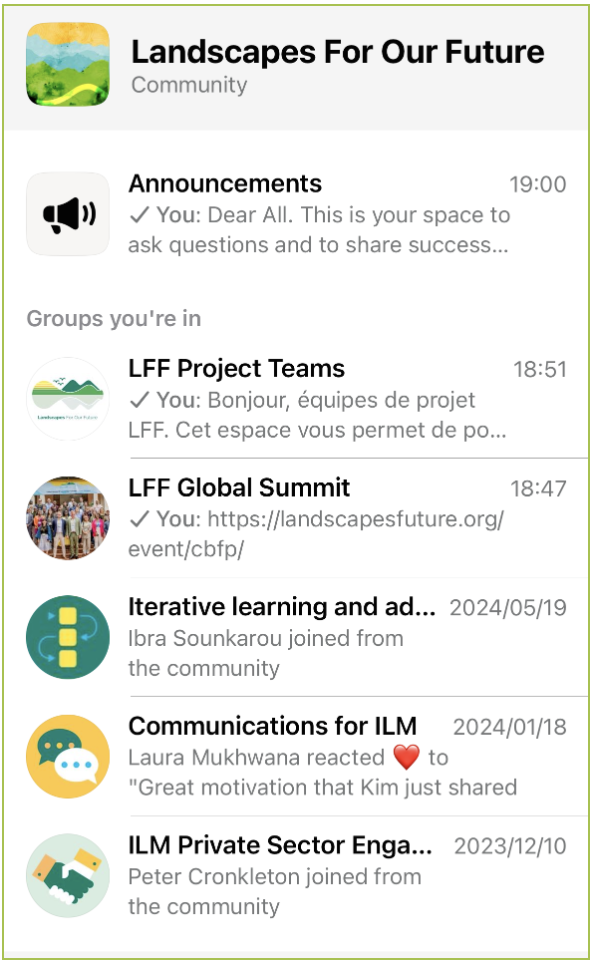
We’d love to hear your thoughts: these six were our initial hypothesis, subject to change as learning progresses. What do you think? Tell us in the WhatsApp community groups below.
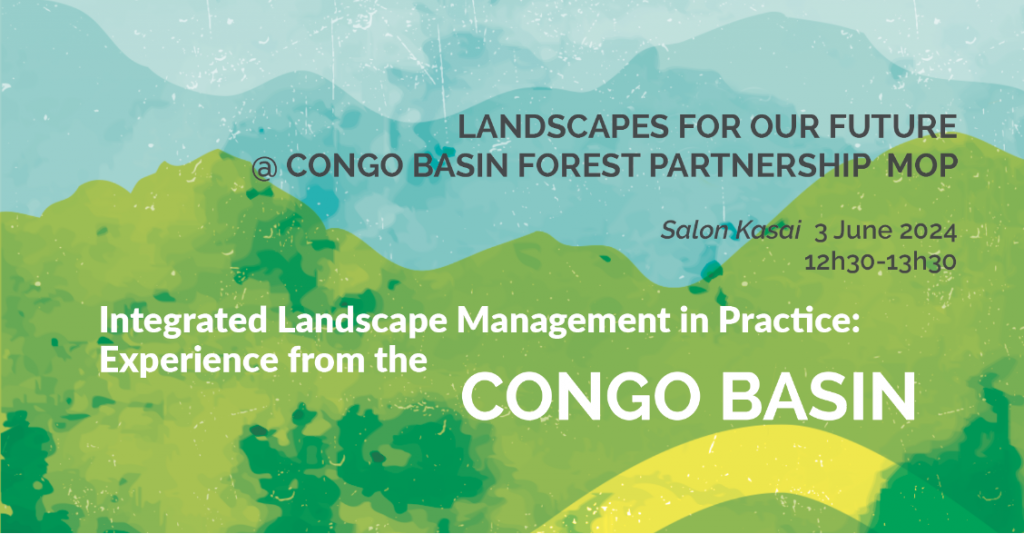
The 20th Meeting of the Parties to the Congo Basin Forest Partnership (CBFP) takes place from 3 to 5 June 2024 in Kinshasa, DRC. We’ll be there to discuss Integrated Landscape Management as a solution in the Congo Basin, and to launch our new Landscapes in Practice series. If you’ll be at this prestigious regional event, let’s meet up?
You’re invited to join the Landscapes For Our Future community on WhatsApp, where you’ll find a range of groups in which you can share your highs and lows, questions and successes with other ILM champions. ?
This is a space for all of us. Please invite all of your team members and partners to join this community. If you would like to create and lead a discussion group of your own within the community, we invite you to do so.
News or views to share? We’d love to hear from you as we all learn and implement the Integrated Landscape Management process together.
– Central Component
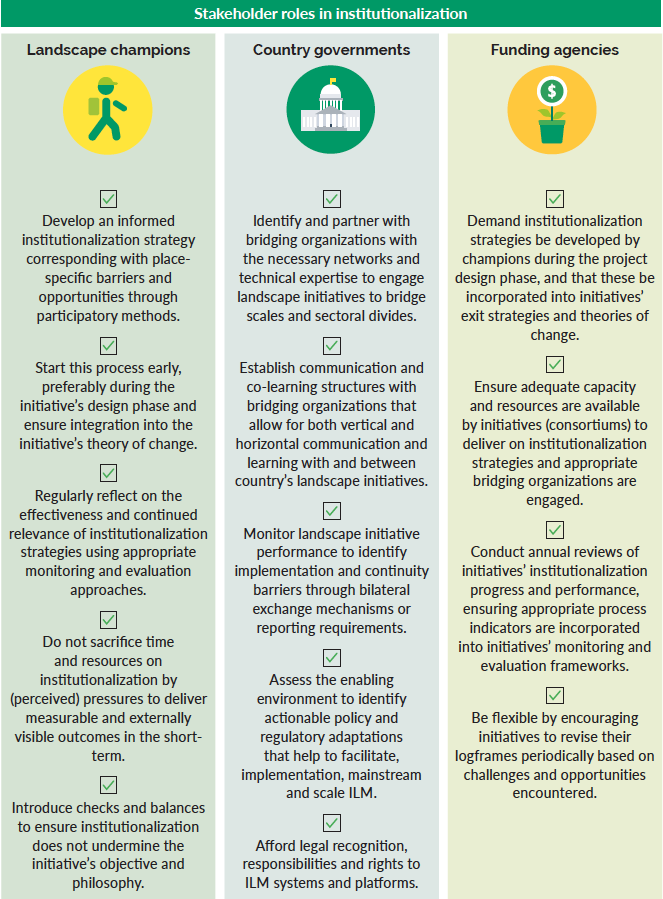
Landscapes in Practice: Institutionalization
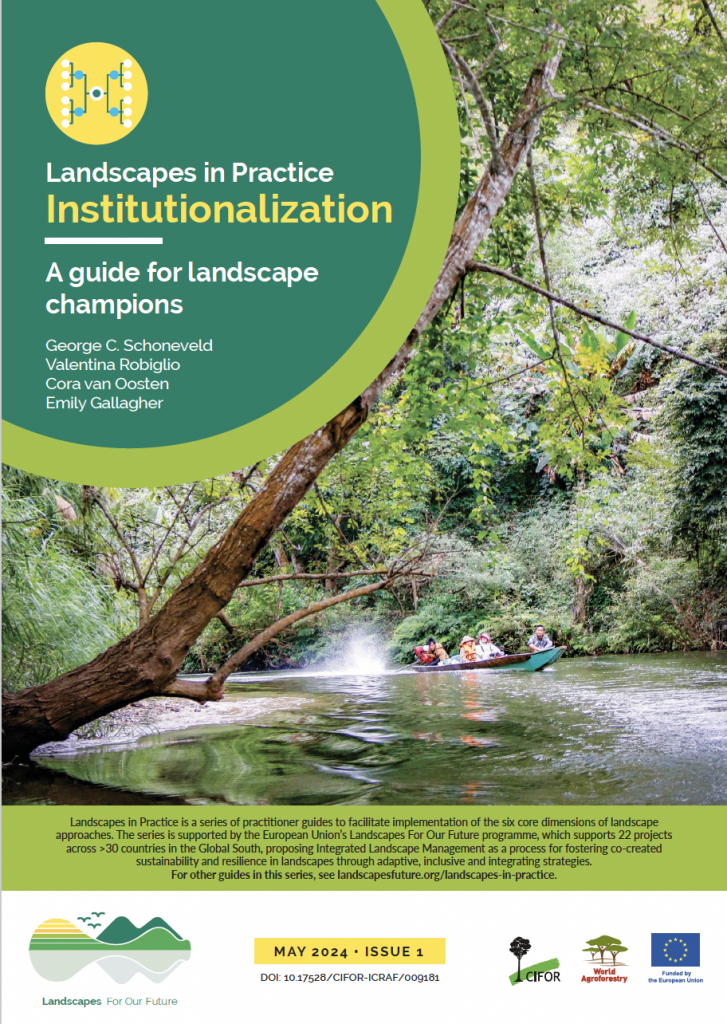
Landscapes in Practice is a new series of practitioner guides to facilitate implementation of the six core dimensions of lntegrated Landscape Management (ILM). This paper discusses the importance of institutionalization and provides an eight-step strategy to achieving it.
Dominique le Roux
09/05/2024
With landscape “champions” in mind, the authors set out to provide an overview of the state of the knowledge, intended to focus your thoughts and catalyse adaptive on-the-ground action.
Who are these champions? They’re the in-the-field practioners as well as all those who advocate for landscape approaches. If that’s you, read on for a summary of the paper. Better yet: download the full 12pp PDF.
If the impact of a landscape intervention is to endure, effective ‘institutionalization’ is needed.
This can be achieved by embedding participatory, adaptive and cross-sectoral planning and decision-making processes in existing institutions and systems.
Institutionalization can strengthen a landscape initiative’s viability, continuity and resilience to disruption and political shifts. Plus it can open new avenues for influencing sustainable development policy and programming.
Too little capacity, too few resources and too much emphasis on delivering short term, quantifiable impacts deter ‘landscape champions’ from effectively investing in institutionalization. As a result, there is a higher risk of their landscape initiatives losing momentum, especially when thought of only as ‘projects’.
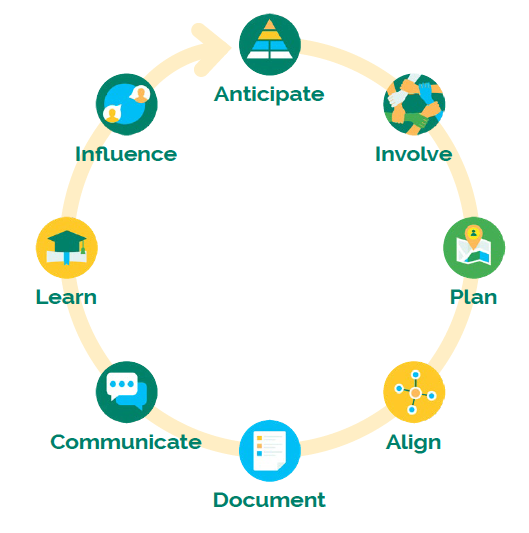
Based on experience gained monitoring and implementing landscapes initiatives, we propose an eight-step strategy that can landscape champions to more effectively institutionalize a landscape approach.
An ILM institutionalization strategy
The iterative eight-step strategy proposed by the authors on behalf of the Central Component of the Landscapes For Our Future programme is designed to harness the benefits of institutionalization while addressing barriers. It is contingent on effective implementation of other ILM dimensions and draws from firsthand implementation and evaluation experiences of development projects adopting landscape and jurisdictional approaches.
Champions can tailor this strategy by combining, skipping, or adjusting the sequence of steps to suit their specific context and needs.
Anticipate: It is crucial to anticipate implementation barriers both within and beyond the landscape. This requires a participatory appraisal that helps identify strategic stakeholders and the structures, processes and capacities the initiative should aim to influence or build, based on the initiative’s common vision.
Involve: Strategic stakeholders identified in Step 1 should be actively engaged early in the initiative’s relevant co-creation events and multi-stakeholder processes.
Plan: Co-develop an institutionalization strategy with project (boundary) partners that addresses the challenges, builds synergies, and capitalizes on the opportunities identified in Step 1.
Align: Align landscape initiatives with relevant internal and external policies, plans, strategies and institutional structures.
Document: Systematically document successes, barriers and failures of the landscape initiative, particularly in relation to adoption, replication and scaling of landscape initiatives and associated solutions.
Communicate: Strengthen engagement and awareness among both internal and external stakeholders by communicating initiatives’ progress, documented achievements, lessons learned and results.
Learn: Facilitate vertical and horizontal learning by establishing spaces for stakeholders to exchange experiences and knowledge across scales and between sectors and societal domains.
Influence: Once steps 1-7 have been completed, landscape stakeholders are better positioned to influence enabling environments.
Download the full paper for detail on each of these eight steps, as well as how to address barriers and leverage existing political commitments.
We invite you to settle in amongst the din of the cicadas and eavesdrop on the conversation as we chat about that 'dirty' word: power.
Dominique le Roux
30/04/2024
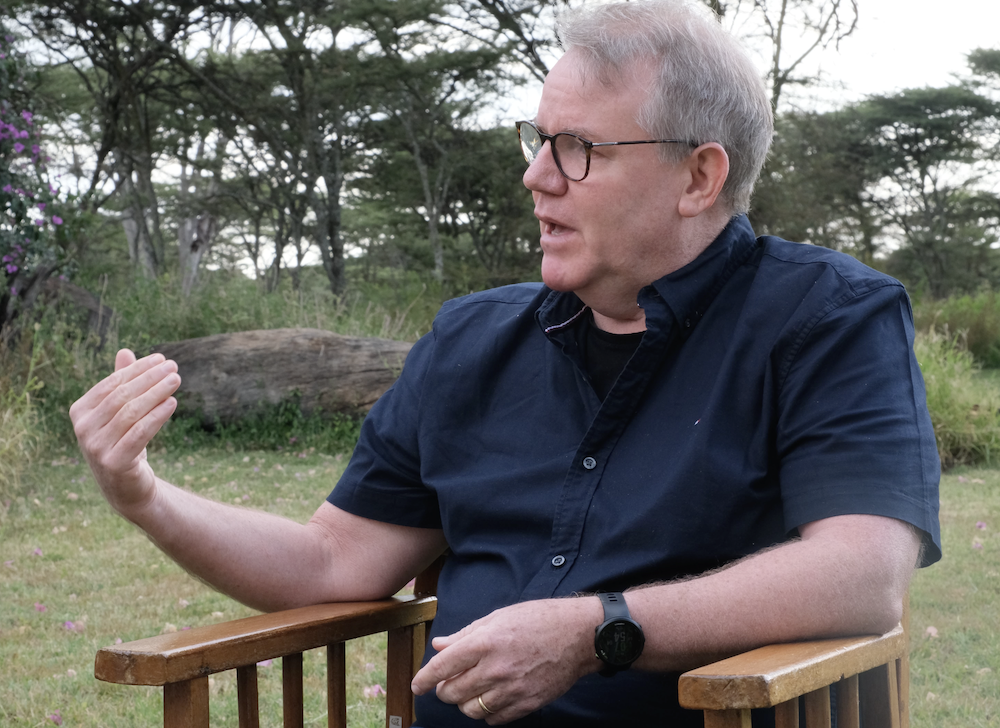
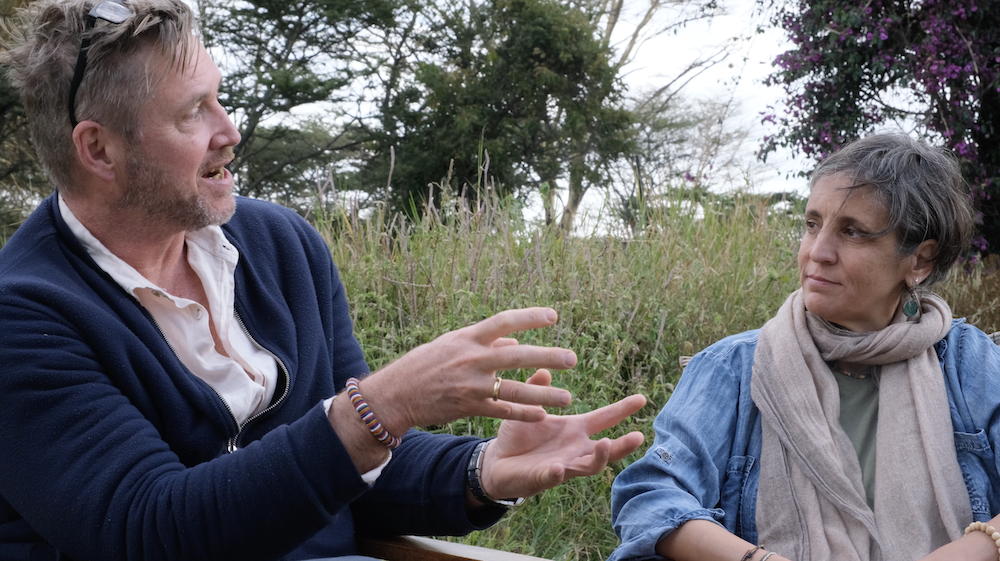
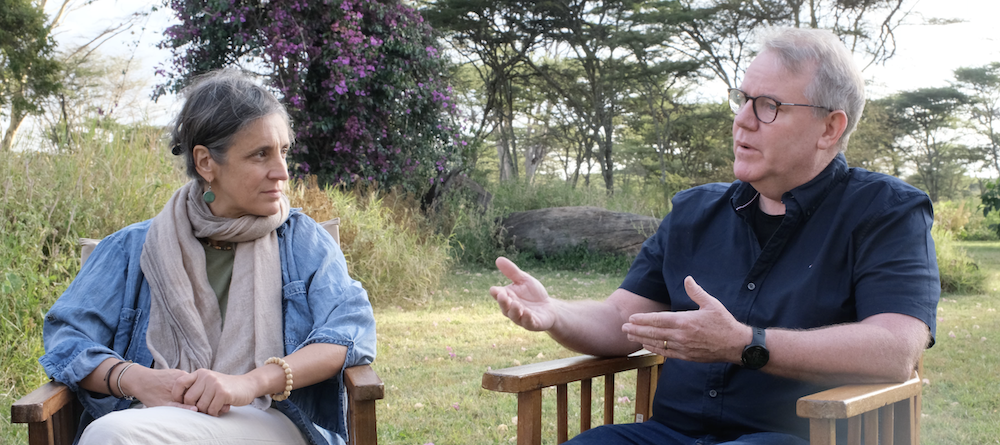
When our Central Component gathered in Northern Kenya recently for a team workshop, there were fascinating conversations to be had. One dawn morning, Valentina Robiglio grabbed a coffee and sat down with her colleagues Kim Geheb and Peter Cronkleton for a discussion on a topic that rears its head all the time but is very rarely addressed directly.
Valentina:So, in these past days we have talked a lot about ILM, landscape management and landscape approaches, and we talked about the six elements that are important for ILM, but we haven’t really touched on an underlying element that we know is very important, that is power. Can you tell us more?
Kim: Landscapes are socially produced. They emerge as a consequence of human activity and human relations. And, of course, within human relations, power is a powerful characteristic of the relationships between people. And so we understand that power finds its way into our understanding of landscapes. In fact, I often suspect that power – and the power relations between stakeholders within a landscape – defines the landscape. It’s a very dominant characteristic of how landscapes look, their condition and how, ultimately, they’re governed and managed.
In fact, I often suspect that power – and the power relations between stakeholders within a landscape – defines the landscape. It’s a very dominant characteristic of how landscapes look, their condition and how, ultimately, they’re governed and managed.
Kim Geheb
Valentina: So, when you think of power in this way, then at the relationship that stakeholders might have through formal and informal institutions, is there a way to regulate or influence power relationships in a landscape in order to achieve the outcome?
Kim: We very rarely like to talk about power. It’s kind of a dirty word and yet it’s such a prominent feature of how we can actually characterize a landscape. I think that a lot of the approaches that we use within the context of ILM are implicitly about managing power relations. For example, we talk about inclusivity. That’s because we recognize that there’s a group of people within the landscape who are not included in the power landscape. So we try to manage that. When we use multi-stakeholder fora, for example, that’s also another way we try to ensure that power is better distributed amongst participants in a landscape. Very often the kinds of capacity building that we provide are intended to empower people”.
We very rarely like to talk about power. It’s kind of a dirty word and yet it’s such a prominent feature of how we can actually characterize a landscape.
Kim Geheb
Peter: I think you made a good point the other day when you were talking about proponents of ILM projects, whether they’re NGOs or other types of actor: they are not conscious of their own power and so they don’t see their ability to convene people, their ability to interact with people at different levels of power within a landscape. They underestimate how important power is because they’re coming in as a powerful actor in a landscape. And so I think it was a good point when we were talking about not being more conscious of the power dynamics, and how an external facilitator plays into that dynamic, but being conscious of themselves as a broker, they’re trying to bridge these gulfs between different people, realizing that when they’re out of the system, things could necessarily snap back into their original form. So, they need to take that into account: how do you change power dynamics and not put people in jeopardy, not create conflicts, not create other types of problems that were unintended at the start.
Kim: Spot on. So we think that when it comes to project formulation, a really critical part is how we understand our intervention. I mean, even the word “intervention” has power connotations, and so our intervention into a landscape has to be accompanied by a critical self-reflection of our power as technical people, as highly educated people, as people who potentially come from other cultures: how that’s going to influence power dynamics within a landscape. That becomes really very, very critical.
Valentina: I was thinking, we are now talking about power in general, but then it’s power to do what? And maybe, based on your experience and on the initiatives that we are looking at in the project, could you give some examples? I mean, what are the key dimensions of power and the key elements of power, and to do what, that count in a landscape when we talk about multi stakeholders?
Kim: I mean there’s a hard line, of course, with power. And so for a lot of our landscapes, we have to deal with violent conflict, which is kind of like the ultimate form of oppressive power. We see this in, for example, our Papua New Guinea landscape. We see this in our Burkina Faso landscape. The landscape that we share between Chad and the Central African Republic also. This is a key aspect of trying to implement ILM in these contexts. So that’s one part of it. But I also think that, when we talk about ILM, we have to really draw attention to is that the first word in ILM is ‘integration,’ which I think is very much a power statement. Often, the highest form of integration is collaboration, but there are powerful actors that prevent collaboration and get in the way of collaboration, and so power then becomes a significant facet that we have to pay attention to if we want integration. That then becomes central to our thinking about how we engage with stakeholders and the governance systems that then emerge out of that collaboration.
The first word of ILM is ‘integration’, and I think that integration is very much a power statement.
Kim Geheb
Peter: It’s also important to think about the sources of power. So, you might have people that are economically powerful. You have political power. There are other kinds of social power that give people rights and obligations within a landscape that influence how people interact. There are formal sources of power and informal sources of power, customary rules, traditions that shape how people are working. But also, in some of the landscapes we’re working in where there are illicit activities, the issue is actually the lack of power of some key stakeholders. Maybe you’re in a frontier area where governments don’t have a strong presence and because of that, for example, cross border drug trafficking influences how people interact in a landscape. It could either be that the government is absent, so these actors are in the landscape, or they’ve been co-opted somehow and that the power comes not just from the economic power of these illicit actors but also the threat of violence. And so, you have to be aware when you’re working in these landscapes that you’re not putting people in jeopardy when you leave because you’ve encouraged them to exert their rights or to stand their ground.
Valentina: I think this is very important because often we have the perception or there is this assumption that when you talk about the state or ‘el estado’ there is power. But actually, in our analysis, often it is the fragility of the state that generates and often the public authors can generate it. So it’s very interesting. And then what is the power that ILM practitioners have? So when they start intervening in a landscape, engaging with stakeholders, of course they come from an institution with a name, but what is the type of power that they have to exert? The type of power they have when they start and the type of power they have to assert in order to build that constructive dynamic. What do you think? How would you describe that problem?
Kim: I think it’s profound, and an intervention has to be self-aware of the power that they bring to a landscape, because it’s basically a power landscape. Fundamentally, when we talk about an ILM success story, it’s because power relations between actors have been reconfigured in positive ways. And so a lot of the power that an intervention can bring in an ILM context is, for example, as Peter mentioned, convening power: the ability to assemble actors within the landscape. I think we often underestimate how difficult collaboration is to achieve, but our ability as an intervention to ‘weave’ collaboration has high potential. For example, if we bring into the equation mediators, or we bring into the equation facilitators – people who have the soft skills to enable or facilitate people to come together – this then becomes very important.
I also think that the power of voice is something that we pay very little attention to. A key characteristic of multi-stakeholder platforms is the emergence of voice. It is that people feel emboldened and sufficiently confident that they can say and speak out about the problems that they confront within the landscapes. Very often the kinds of things that they talk about are significant power imbalances within the landscape. So, hypothetically, let’s say we have a landscape where there’s a very large corporate actor. That immediately changes the power dynamic. It’s a massive presence that comes in, and so an intervention might have the resources to diminish that power, or to draw that actor into the landscape arrangement. To change this, the intervention might be able to take advantage of its own relationships with government for example. This is a very key thing: that a lot of interventions have these networks that local people don’t actually have. We also have to understand that at higher scales there are all kinds of power dynamics; that we might have NGOs that are disempowered vis-a-vis the state or the government. Peter touched on a very good point: that a lot of the contexts where we operate are under-regulated and the presence of the state is very low, so we’ve got a hole. In fact, it can potentially get meaningless to talk about formal power within these contexts. Everything is informal and that creates its own dynamic. As an intervention, we have a phenomenal ability to alter the power dynamic, and figuring out how we can do that means that we have to look squarely at power: how we can characterize it, understanding its dynamics and how it flows across the landscape, how it influences the landscape. Then we can position ourselves in such a way that we can change those dynamics in positive directions.
Peter: And one way we do that is we’re very conscious of the need to come in as neutral actors, or try to. You will hear the term ‘honest broker’: when we come in we’re able to go and talk to the owner of a timber company or visit a rancher and talk to them, whereas an environmental NGO may have difficulty building bridges with those actors because their environmental agenda is seen as a threat to the livelihoods of these other actors.
Often, we go in with a conservation agenda ourselves, but we try to put that in the background and come in with a message that in most landscapes there are opportunities to find common ground, common interests. You don’t necessarily have to focus directly on the main conflicts but you can find lots of other dynamics that can be fixed or resolved through negotiation, because people generally on all sides have interests in things like clean water, people like to avoid pollution where they live, obviously people want to avoid threats of violence… So there are opportunities.
Peter Conkleton
Valentina:I was going to ask about the power of an ILM practitioner. It is very much related to the capacity of the practitioner: the skill to convene, to build trust, power that comes from accountability and also the capacity to identify this ‘neutral space’, to be perceived as an owner. I think that’s very important, but then there might be a challenge when there are issues related to conflict, conservation, development… Very often we have very strong conservation institutions that come in managing the landscape, and maybe they already have a legacy and they have an agenda that’s very clear, so does that reduce their convening power as an ILM practitioner? Or what do they have to do in order to be perceived as more neutral and more able to really work across the different dimensions?
Very often we have very strong conservation institutions that come in managing the landscape, and maybe they already have a legacy and they have an agenda that’s very clear, so does that reduce their convening power as an ILM practitioner? Or what do they have to do in order to be perceived as more neutral and more able to really work across the different dimensions?
Valentina Robiglio
Peter: You sometimes hear people talk about fortress conservation: where it’s very top down, very much a command and control approach to conservation. And many environmental NGOs and governments have confronted the issue that they create enemies among local actors. The people that they need to convince that conservation, certain types of biodiversity or conservation of different landscapes is important, are seen as a threat by the government and those people see the technicians or employees of an NGO as threats. So you’ve seen a shift over recent decades to strategies like co-management where environmentalists try to identify sustainable livelihood options or alternatives that local people could still make a living, still feed their families, still have opportunities and not necessarily need to extract resources in an endangered forest or convert mangroves to other uses. Whatever the landscape is, it’s a challenge. It’s something that we’re still working with, but if there’s a general consensus that local people aren’t deriving benefits from biodiversity, it’s difficult to convince them without some other type of incentive that they should be collaborating.
Valentina: And I now have a question. If we think about that power, you mentioned people, institutions. We can think of power at the family level in men, women, youth. Can you make some examples of what would be the entry points to move all these levers in a nested way in the landscape, starting maybe from family and participation. How do you activate?
Kim: So in a sense, how do we locate? And I think that you touch on a really good point here, that the power is relative. You can’t have somebody all by themselves and then they’re powerful. It’s power over, power with, or power under. And so we get that immediately when two people or groups come together, the power surges – possibly in positive directions. Remember, power doesn’t necessarily have to be a bad thing.
Valentina:That’s why you want to empower.
Kim: Exactly, because characterizing the landscape in power terms then becomes extremely relevant, alright. And what I often find very exciting is that other methodologies, or indeed emerging ones, look at how we are able to characterize power within the landscape. I don’t want to get technical, but one of the methods that we’ve been playing around with is this technique called Net-mapping. It’s a stakeholder approach, so we identify who the stakeholders are, but really the key thing is to be able to characterize the relationships between the stakeholders. I often say that it’s the in-betweenness of things that is relevant. It’s not the individual stakeholders by themselves. Of course, we like them, they’re good people, but it’s the relationships that they share with others that is of consequence to the landscape.
Valentina:So, you focus on the arrows?
Kim: Yes.
Valentina:Okay.
Kim: And characterize that as power under, power over or power under. And then we can begin thinking about strategies with which to change those relationships. I also think that what becomes really key here is that when we characterize those relationships it allows us to see where our risks lie within the landscape. I mean, if you’ve got a single completely unaccountable actor in the landscape, then we have to think about how we are going to address this presence within our system. And that then becomes very important to the overall success of a project.
And I just wanted to touch on a final thing here: what has always been very surprising to me is that, when we do these Net-maps with individual projects, the projects very rarely locate themselves in the map, and this I find very interesting. I think maybe it’s because they feel modest and they don’t want to suggest that they have an unnatural presence within the landscape. But, equally, in the absence of them being located in the landscape, we don’t get a sense of what that project needs to be doing in terms of changing those different relationships between partners. Then, equally, what does the project need to do for itself in order to be successful? Which relationships does it need? Which relationships does it have to manage? Which relationships does it want to avoid? This is also a key thing.
And then we can begin thinking about strategies with which to change those relationships. I also think that what becomes really key here is that when we characterize those relationships it allows us to see where our risks lie within the landscape. I mean, if you’ve got a single completely unaccountable actor in the landscape, then we have to think about how we are going to address this presence within our system. And that then becomes very important to the overall success of a project
Kim Geheb
Valentina:I think that happens because practitioners come into a landscape and exercises like stakeholder mapping, Net-mapping, are considered like “let’s state a baseline.” So when you do a baseline, you want to be neutral. It has to be the picture of your landscape, so you don’t put yourself in the picture.
Kim: Because you’re painting, right?
Valentina:Right, absolutely. So I think that’s something that’s an important message. One thing that for me is very important is how do we understand because there are actors… We recently made an assessment of the gender work we did in Peru, where there are women who basically do not actively participate and don’t have much agency. So you, as an external actor, realize this huge gender gap but they don’t seem to be really aware of it, to the point that they’d say “no, but I don’t want to. I’m satisfied with my level of agency.” How do you intervene in a way that people might realize that they actually need to be empowered so that there has to be something?
Peter: We’ve been doing work on gender transformative approaches to conservation, to land tenure reform, different types of projects. And one of the mechanisms that we’ve found is very successful are simply exchanges where women can share their experiences, hear from others’ opportunities, particularly where women can interact with other women that have become leaders of organizations or enterprises. And they’ve reported to us that after going through these exchanges where they identify common ground, where they identify similar conflicts or challenges that they face and, hearing the experiences of how others have overcome those challenges, the women come out of those exchanges reporting greater confidence. More importantly, realizing that they already play those roles often in their communities, often behind closed doors. You know that women in some societies and some communities may not stand up publicly in a meeting and express their opinion, but they make sure their husband’s opinion expressed in public reflects their interests as well. But, when they start learning how other women have used strategies or come up with ways to start enterprises or organizations, those women start reflecting or talking to their neighbours, meeting with their daughters and talking about how they could take advantage of opportunities that they face, or that they could stake out positions for themselves within their community, within their association, that’s different. And one of the key aspects of gender transformative approaches is that you can’t change a power dynamic in a household or in a society without the involvement of men and women, so creating a situation where women might be empowered entails convincing men and boys that having women play a more active role in an enterprise or taking charge of an organization is in everyone’s benefit.
Valentina:So that, I think, is important because he’s also convincing the others that the actor should have more power. That reminds me of when we played that game during the Global Summit on the oil palm. And I think that that was a useful approach to make groups understand the different forms of power and the interplay of it. What are things gained or what are the other approaches that can be used to make people realize? We have Net-mapping; we have games to realize what the power dynamics are, how they interplay over time, and how do you make people realize that they can be changed? What can ILM practitioners do?
Kim: When Peter was talking just now, one of the things that occurred to me, of course, is that there are many different species of power. And how that then articulates itself is often something that we don’t necessarily realize when we walk into a situation. With our training and our experience, we’re kind of coached to look for particular types of power without necessarily observing other types.
Valentina:The dynamic is in the interplay.
Kim: Exactly. So, of course, we can’t make anybody do anything. That’s not our role ever, but it’s interesting to me that when we talk about the creation of opportunity, it’s possible to couch that in power terms: like creating new spaces where people feel that they can exercise their power. They can then move into that opportunity if they choose to do so. Multi-stakeholder fora can be these spaces, and I think we can then use these as a way of supporting people to explore what power they do have and what opportunities the projects are then bringing that may empower them in ways that then yield landscape level outcomes.
We’re now sitting in a great example of an immense power dynamic here in Northern Kenya. This is the Lewa Wildlife Conservancy. As a conservancy we can understand the power of this place in terms of, for example, land tenure. Land tenure is something that people in CIFOR-ICRAF pay a lot of attention to: the power of limiting the ability of people to access these resources here. And as we go out into this landscape, we focus very much on the wild animals within it, but the power is in the grass. It is the fodder that is out there. It is grass that lies at the centre of tensions between the large, Northern Kenyan, wildlife conservancies and the nomads and livestock keepers outside the conservancies. When tensions between them flare, it is about grass. So then, in our awareness of that relation, how can we ameliorate it? Our hosts here, the Northern Rangelands Trust, they recognize this and a big part of their interventions together with communities in this landscape is specifically looking at pasture. How can we improve pasture? How can we make sure that pasture is available during the dry season? This is an area very affected by climate change, so it’s difficult to predict what the climate or weather is going to be over the course of the year. How, under those circumstances, can we make sure that there is adequate fodder for the millions of cattle and goats that are out there, and which then support everybody’s livelihoods? These kinds of questions have everything to do with power.How, under those circumstances, can we make sure that there is adequate fodder for the millions of cattle and goats that are out there, and which then support everybody’s livelihoods? That then becomes an opportunity, so we need to begin thinking about these sorts of managerial interventions as power opportunities.
Valentina:I think you just mentioned an important thing. It’s not strictly related to power, but you are kind of saying that, in a landscape where, for example, you have all these objectives of conservation and the issue is conflicts and friction about grass, the solution can be outside. So you might say that your landscape is this, and the easiest thing is to define a system in relation to what we see here, but actually the solution is intervening on land that is outside the geographical boundaries of this area. And that’s really system thinking. I intervene in other areas, generate resources outside so that people reduce pressure on this. And I think that’s very important to understand, not only in terms of power dynamics or its systems.
Kim: But it’s also accountable. I mean an organization like NRT has a very large number of constituents spread all the way across Northern Kenya, which includes other wildlife conservancies as well as nomadic communities. So, here there’s a dynamic conversation around how to deal with this political grass: some want to allow neighbouring communities onto the conservancy provided they follow guidelines. They don’t want, of course, the land to be completely denuded of its vegetation cover. Other would rather only allow community cattle onto their land only when circumstances are severe – like during drought. Others still would rather not allow nomads onto their land ever.
This text has been edited for clarity and differs slightly from the original recording.
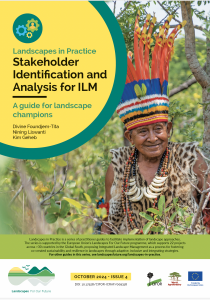
Landscapes in Practice: Our guides for landscape champions
The Central Component is tasked with synthesizing and disseminating knowledge and lessons from Landscapes For Our Future's 22 projects. Our new series of practitioner guides aims to do just that in order to facilitate implementation of what we propose are the six core dimensions or elements of landscape approaches.
Dominique le Roux
26/04/2024
Our learning missions to almost all of the projects, lengthy discussions and communications with project implementors on the ground and – most significantly – our Global Summit and Learning Exchange, where representatives of 18 of the 22 projects met and workshopped and compared notes and shared experiences, have delivered a significant amount of data and insight. Add to that the substantial volume of academic research on landscape approaches by our team, our colleagues at CIFOR-ICRAF and others in the scientific community, and it’s obvious there’s a vast amount of learning to synthesize.
Landscape champions are those everyday heroes applying Integrated Landscape Management in places and spaces around the globe, and the researchers, strategizers, policy makers and funders who advocate for the process.
Our practitioner guides are intended as concise summaries for busy people. We present the state of the knowledge on each subject in a simple, accessible way so that landscape champions can focus on the processes at the heart of Integrated Landscape Management.
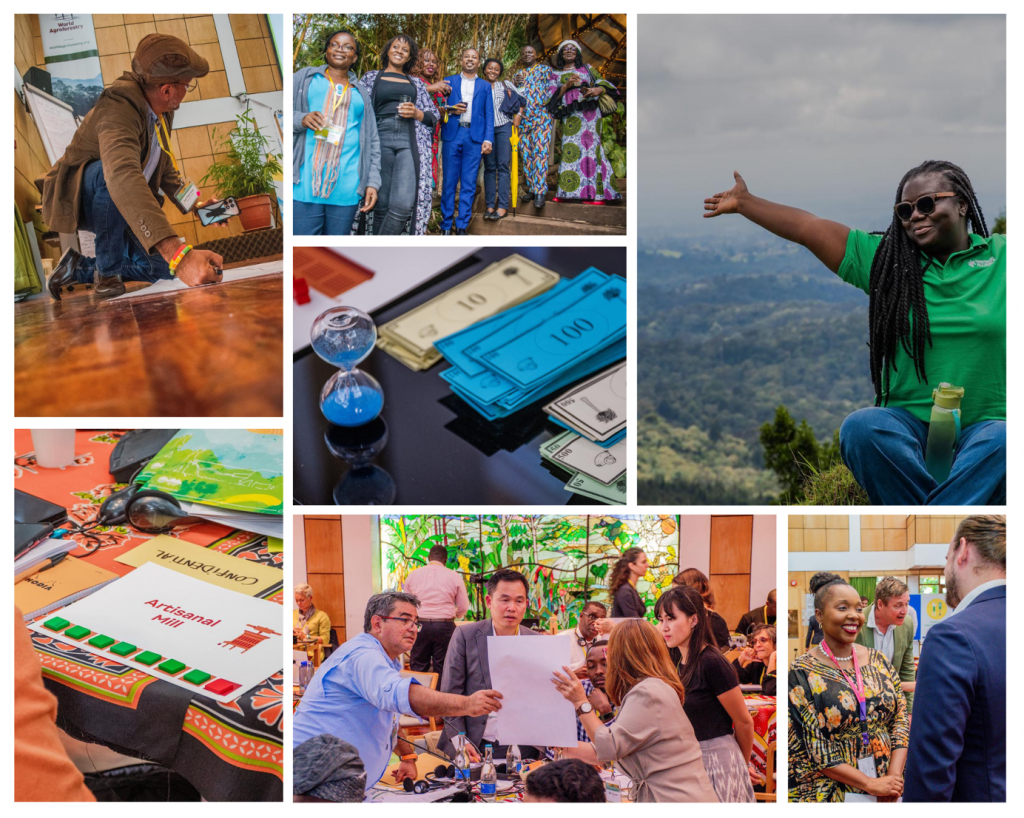
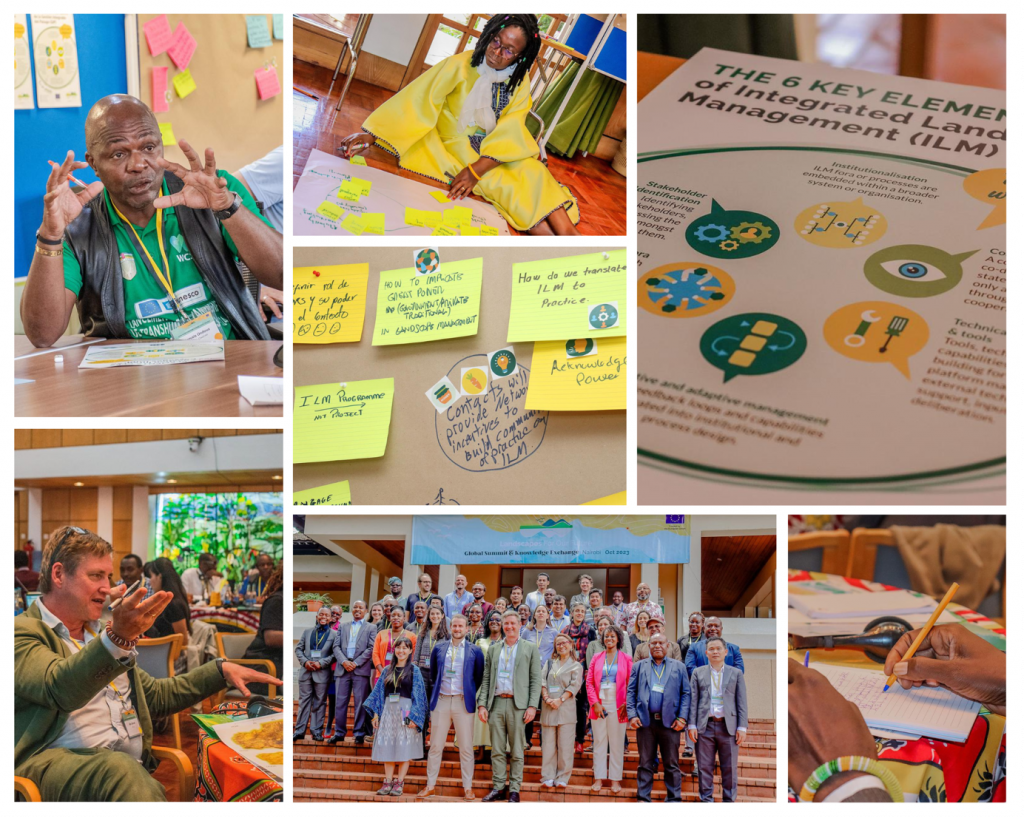
That’s participants describing our recent Global Summit and Knowledge Exchange that brought together representatives of most of the 22 Landscapes For Our Future projects around the globe. Here’s a glimpse of what you might have missed. (With so much more in store for 2024.)
PLUS: Talk to us about communities of practice: What? When? How? Who?
Keep in mind the purpose of the Landscapes For Our Future progamme, which is – through these 22 pilot projects – to guide the EU Delegations and partners on how to implement ILM.
Bernard Crabbé, Head of Environment Mainstreaming and Circular Economy Sector at the European Commission DG INT
We are committed to change leadership in the landscapes arena. We seek opportunities to embed landscape approaches within global and national institutions and constantly strive to deepen our understanding of how this can be achieved effectively.
Eliane Ubalijoro, CEO, CIFOR-ICRAF, speaking at the opening of the Summit
As a kid, did you ever play the “broken telephone” game? The one where you whisper something to one person who whispers it to the next and so on until the story comes back to you with very different details. Or, more often than not, no details at all.
Isn’t that what so often ends of up happening when we put the facts about our worthy projects out into the world? Do we inspire people to tell our stories? And when they do, what information do they convey to the next and the next and the next listeners?
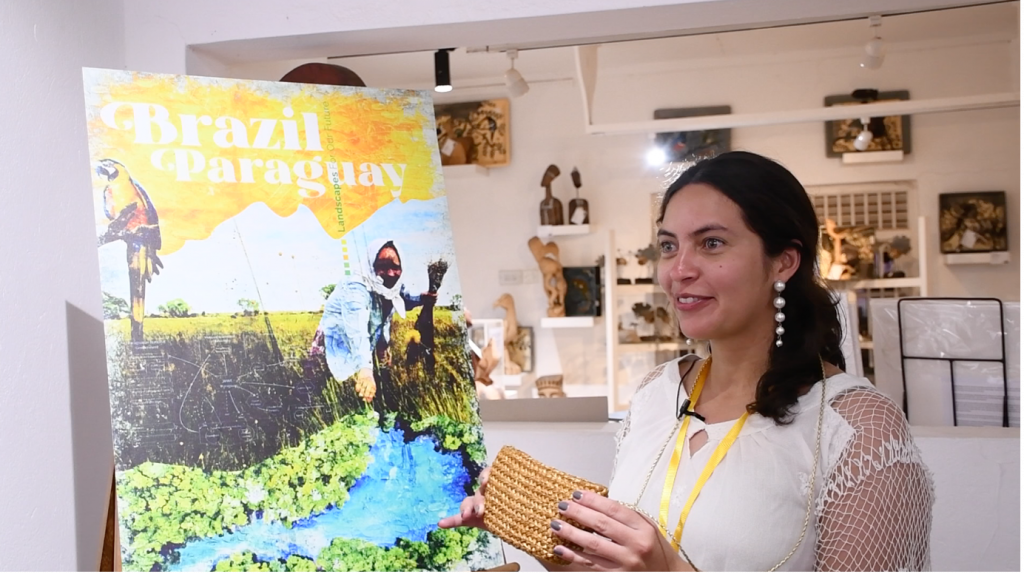
At the Summit, we challenged the participants to tell a story about their landscape – something that would hold listeners’ attention and capture their imaginations. As props, all they had was an art piece we collaborated on. No PowerPoint, no text – just artful storytelling. The results were magical! It turns out we have so many talented storytellers amongst us.
Khalil Walji and Freidah Wanda playing at some serious negotiations.
The Summit brought together 50+ ILM practitioners to explore the inner workings of an integrated approach to landscapes management. But how best to bring everyone to a common understanding of these principles?
A game, of course!
Claude Garcia’s strategy game simulated the oil palm supply chain in Cameroon, and participants played their parts with aplomb. Taking on various designated stakeholder roles helped us all to better understand the effects of decisions, values, and choices on ecosystems. Serious learning. But so much laughter too.
Central Component Deputy Co-ordinator Khalil Walji summed up the session so well on his social media, and we shared his wisdom on our Knowledge Hub.
Communities of Practice, sure. But how? What? When? Where?
A community of practice is a group of people who “share a concern or a passion for something they do and learn how to do it better as they interact regularly.”
This idea of developing such groups emerged strongly during the Summit. We all agreed they’d be useful. But do we agree on what they are and how we want to run them? Please guide us on what you’d like created and how you’d like to be involved by answering 5 quick questions in our survey.
Wishing you a wonderful festive season and looking forward to building on our Integrated Landscape Management successes and learnings together in 2024! — Your Central Component team
To provide the best experiences, we use technologies like cookies to store and/or access device information. Consenting to these technologies will allow us to process data such as browsing behavior or unique IDs on this site. Not consenting or withdrawing consent, may adversely affect certain features and functions.
Functional
Always active
The technical storage or access is strictly necessary for the legitimate purpose of enabling the use of a specific service explicitly requested by the subscriber or user, or for the sole purpose of carrying out the transmission of a communication over an electronic communications network.
Preferences
The technical storage or access is necessary for the legitimate purpose of storing preferences that are not requested by the subscriber or user.
Statistics
The technical storage or access that is used exclusively for statistical purposes.The technical storage or access that is used exclusively for anonymous statistical purposes. Without a subpoena, voluntary compliance on the part of your Internet Service Provider, or additional records from a third party, information stored or retrieved for this purpose alone cannot usually be used to identify you.
Marketing
The technical storage or access is required to create user profiles to send advertising, or to track the user on a website or across several websites for similar marketing purposes.
This website uses cookies to improve your experience and help us analyse our traffic. By clicking "Accept", you consent to our use of cookies. Privacy notice
Functional
Always active
The technical storage or access is strictly necessary for the legitimate purpose of enabling the use of a specific service explicitly requested by the subscriber or user, or for the sole purpose of carrying out the transmission of a communication over an electronic communications network.
Preferences
The technical storage or access is necessary for the legitimate purpose of storing preferences that are not requested by the subscriber or user.
Statistics
The technical storage or access that is used exclusively for statistical purposes.The technical storage or access that is used exclusively for anonymous statistical purposes. Without a subpoena, voluntary compliance on the part of your Internet Service Provider, or additional records from a third party, information stored or retrieved for this purpose alone cannot usually be used to identify you.
Marketing
The technical storage or access is required to create user profiles to send advertising, or to track the user on a website or across several websites for similar marketing purposes.


 Dominique le Roux